| Primary Market Segments |
Municipal wastewater, industrial wastewater, rural domestic sewage, reclaimed-water systems, and sludge treatment. |
EPC contractors, process-equipment manufacturers, modular-system integrators, and operation-and-maintenance providers. |
Relevant project experience, process expertise, local service coverage, and lifecycle support. |
| Main Treatment Processes |
Activated sludge, oxidation ditch, sequencing batch reactor, membrane bioreactor, anaerobic treatment, and biological nutrient removal are widely used in China. |
Process selection based on influent quality, discharge limits, land availability, energy use, and operating conditions. |
Guaranteed effluent quality, energy consumption, footprint, process stability, and ease of maintenance. |
| National Discharge Standard |
GB 18918-2002 Class 1-A limits include COD ≤50 mg/L, BOD5 ≤10 mg/L, suspended solids ≤10 mg/L, total nitrogen ≤15 mg/L, and total phosphorus ≤0.5 mg/L. |
Designs treatment trains capable of meeting national, provincial, or project-specific discharge requirements. |
Contractual performance guarantees, laboratory testing, commissioning results, and compliance records. |
| Municipal Project Scale |
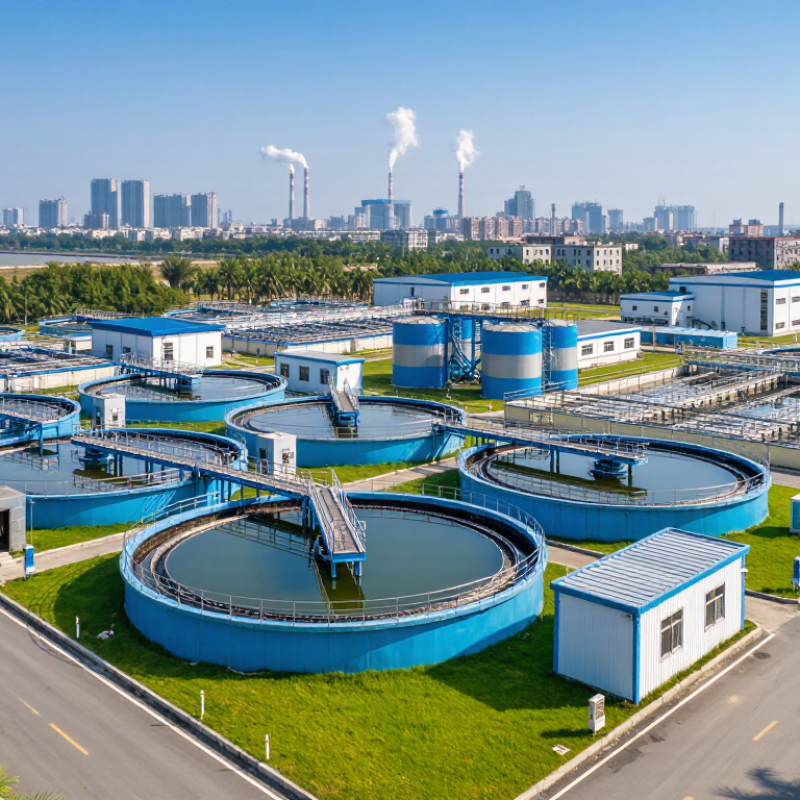
Projects range from small decentralized facilities serving villages or industrial sites to large urban plants serving hundreds of thousands of residents. |
Scalable designs covering packaged units, containerized systems, prefabricated modules, and large civil-engineering plants. |
Hydraulic capacity, peak-flow handling, expansion planning, redundancy, and construction schedule. |
| Rural and Decentralized Treatment |
Decentralized treatment is important for dispersed settlements where centralized sewer networks are difficult or costly to build. |
Prefabricated and packaged systems with remote monitoring, simplified operation, and low sludge production. |
Installation speed, low operator dependence, winter performance, maintenance access, and total operating cost. |
| Industrial Wastewater Applications |
Food processing, chemicals, pharmaceuticals, textiles, electronics, mining, and manufacturing require specialized pretreatment and biological or advanced treatment. |
Custom process engineering for high organic loading, toxic compounds, salinity, oil, heavy metals, or difficult-to-degrade pollutants. |
Pilot testing, influent characterization, process guarantees, corrosion resistance, and hazardous-waste handling. |
| Water Reuse and Advanced Treatment |
Reuse applications commonly require filtration, disinfection, activated carbon, ultrafiltration, nanofiltration, or reverse osmosis depending on the end use. |
Integrated tertiary-treatment systems for industrial reuse, municipal landscaping, cooling, and other non-potable applications. |
Product-water quality, membrane fouling control, concentrate management, recovery rate, and replacement costs. |
| Digital Monitoring and Automation |
Online monitoring of flow, pH, dissolved oxygen, suspended solids, ammonia, chemical oxygen demand, and other parameters is increasingly used for process control. |
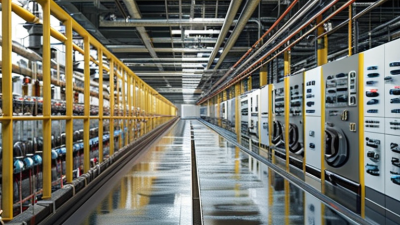
PLC/SCADA integration, remote alarms, automated aeration, dosing control, data logging, and predictive maintenance functions. |
Data accuracy, cybersecurity, interoperability, cloud access, alarm response, and availability of technical support. |
| Energy and Sludge Management |
Aeration is typically the largest electricity-consuming process in conventional biological treatment, while sludge handling affects both cost and compliance. |
High-efficiency blowers, fine-bubble aeration, variable-frequency drives, sludge thickening, dewatering, digestion, and odor control. |
Specific energy consumption, sludge yield, disposal route, odor performance, spare parts, and operating labor. |
| Compliance and Certification |
Projects normally require compliance with applicable Chinese environmental standards, construction requirements, safety rules, and local permitting conditions. |
Documented quality-management procedures, equipment test records, engineering drawings, commissioning plans, and environmental compliance documentation. |
Valid certifications, reference projects, factory inspection, third-party testing, warranty terms, and after-sales response time. |
| Commercial Delivery Models |
Common arrangements include equipment supply, design-build, EPC, turnkey delivery, operation and maintenance, and public-private partnership projects. |
Flexible contracting, equipment procurement, civil-work coordination, installation supervision, commissioning, and long-term operation. |
Scope clarity, payment milestones, performance guarantees, liability allocation, spare-parts availability, and service-level commitments. |
| Regional Supplier Coverage |
Supplier capabilities are concentrated around major manufacturing and engineering regions, while projects are distributed across urban, industrial, coastal, and inland markets. |
Regional engineering teams, local installation partners, domestic logistics, and multilingual export-support departments. |
Distance to project site, local response time, export experience, documentation quality, and availability of replacement components. |