Top Types of Sewage Treatment Plant Processes?
A sewage treatment plant process converts contaminated wastewater into a safer discharge or reusable resource. It usually begins with screens and grit chambers. These remove plastics, sand, and heavier solids. Primary clarifiers then separate settleable sludge. Secondary systems use microorganisms to reduce dissolved organic matter. Tertiary treatment can add filtration, nutrient removal, ultraviolet disinfection, or advanced membrane treatment. Each stage has a practical purpose.
The United Nations World Water Development Report has repeatedly warned that more than 80% of global wastewater has been discharged without adequate treatment. However, newer UN-Water reporting shows different results when domestic wastewater is measured by country and treatment level. Its 2024 SDG 6 Synthesis Report estimated that 42% of household wastewater was not safely treated in 2022. Definitions and data coverage vary. That limitation deserves attention.
No single process wins everywhere. Context matters. An activated sludge plant may deliver strong biological removal, but it can require substantial electricity and skilled control. Trickling filters often provide simpler operation. Lagoons can suit small communities with available land. Membrane bioreactors produce high-quality effluent, yet their capital and maintenance costs can be demanding. Anaerobic systems may recover biogas from concentrated wastewater, but temperature and loading conditions influence performance.
Dr. Kartik Chandran, a wastewater treatment researcher at Columbia University, has described wastewater as “a resource, not a waste.” That principle changes how engineers evaluate treatment. The best sewage treatment plant process balances influent quality, discharge limits, climate, land, energy, sludge handling, and future reuse. A clear comparison should examine performance and failure points, not only attractive removal percentages. The trade-offs remain.
What Is a Sewage Treatment Plant?
Top Types of Sewage Treatment Plant Processes?
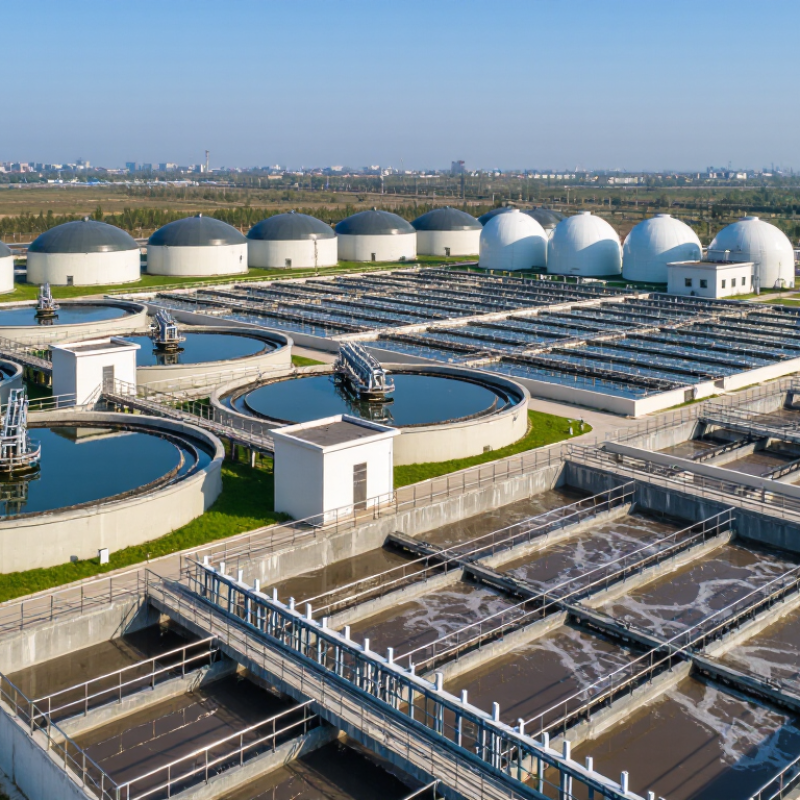
A sewage treatment plant is a controlled facility that cleans wastewater before it returns to rivers, soil, or the sea. It removes solids, organic matter, nutrients, and harmful microorganisms through several linked stages. In simple terms, the plant gives polluted water time, space, and biological support to recover.
Treatment usually begins with screening and grit removal. Screens catch plastics, rags, and larger debris, while grit tanks settle sand and small stones. Primary settling tanks then separate heavier solids from liquid. Secondary treatment uses microorganisms to consume dissolved organic matter. Common methods include activated sludge systems, trickling filters, and rotating biological contactors. Each method needs suitable oxygen levels and careful process control.
Some facilities add tertiary treatment for stricter discharge requirements. Filtration, nutrient removal, and disinfection can reduce fine particles, nitrogen, phosphorus, and pathogens. Sludge is also thickened, stabilized, and dewatered for safer handling.
The correct process depends on flow, wastewater strength, land, climate, and operating skill. No system performs perfectly. Heavy rain can dilute influent, while toxic substances may disturb biological activity. Operators should inspect pumps, record test results, and adjust aeration rather than rely on fixed settings. Small errors matter. A clear design helps, but regular monitoring keeps treatment dependable.
How Preliminary and Primary Treatment Remove Solids
Top Types of Sewage Treatment Plant Processes?
Preliminary treatment protects downstream equipment from large debris. Bar screens catch rags, wipes, plastics, and sticks as sewage passes through. Operators inspect screenings daily because buildup can restrict flow and increase head loss. It is not glamorous work. Grit removal follows, using channels or aerated chambers to separate sand, eggshells, and small stones. These heavy particles can damage pumps and fill tanks quickly.
Primary treatment focuses on settling, not biological breakdown. In a primary clarifier, sewage moves slowly through a broad tank. Heavier organic solids sink and form primary sludge. Grease and floating materials rise, then skimmers remove them from the surface. Well-designed tanks often provide one to two hours of detention, although performance changes with flow and temperature. Turbidity, sludge depth, and surface scum provide useful field evidence. Numbers matter, but visual checks still reveal problems early.
These stages remove much of the settleable solids before biological treatment begins. They also reduce the load on aeration systems and improve process stability. However, they cannot remove dissolved nutrients or all pathogens. During storms, high flows may carry solids through before settling occurs. Consistent inspection matters more than relying only on design assumptions. A clean screen can still hide poor grit removal. That deserves a closer look.
How Biological Treatment Breaks Down Organic Matter
Top Types of Sewage Treatment Plant Processes?
How Biological Treatment Breaks Down Organic Matter
Biological treatment is the working heart of many sewage treatment plants. In an aeration basin, bacteria use dissolved oxygen to consume biodegradable carbon. Their growth forms sticky flocs, which settle in a secondary clarifier. A portion of this sludge returns to the basin, keeping the microbial population active. It is not magic. It is controlled ecology.
Aerobic systems commonly target carbon removal, while anoxic zones help denitrifying organisms convert nitrate into nitrogen gas. Anaerobic reactors work without oxygen and can produce biogas from concentrated organic matter. The right process depends on temperature, flow variation, toxicity, and discharge requirements. A cold morning can slow biological activity. Sudden chemical shocks can disrupt it.
The United Nations World Water Development Report 2017 estimated that over 80% of global wastewater was discharged without treatment. In the United States, secondary-treatment criteria generally require about 85% removal of five-day biochemical oxygen demand and suspended solids, according to U.S. EPA regulatory guidance. Yet percentages can hide weak operation. Poor oxygen control, rising sludge, or an overloaded clarifier may reduce performance quickly. Operators should track dissolved oxygen, ammonia, sludge age, and floc quality daily. Small corrections matter. Biological treatment is powerful, but never automatic.
| Biological Process | Reactor Configuration | How Organic Matter Is Broken Down | Main Microbial Activity | Typical Operating Conditions | Typical Organic Removal | Key Advantages | Important Limitations |
|---|---|---|---|---|---|---|---|
| Conventional Activated Sludge | Suspended-growth aeration basin followed by a secondary clarifier | Microorganisms use dissolved and particulate biodegradable organic matter as food, converting it mainly into carbon dioxide, water, new biomass, and residual solids. | Aerobic heterotrophs |
Typical sludge retention time: 3–15 days Typical hydraulic retention time: 4–8 hours Dissolved oxygen in aeration zone: commonly about 1.5–3.0 mg/L |
Commonly achieves approximately 85–95% BOD5 removal when properly designed and operated. | Well-established process; flexible capacity; suitable for municipal sewage; can be adapted for nitrogen removal. | Requires continuous aeration; produces waste activated sludge; performance can be affected by toxic shocks and poor settling. |
| Sequencing Batch Reactor (SBR) | One or more tanks operated in timed cycles: fill, react, settle, decant, and idle | Organic matter is biologically oxidized during the react phase. Aerobic, anoxic, and unaerated periods can be programmed to support carbon and nitrogen removal. | Aerobic and anoxic biomass |
Typical cycle duration: 3–6 hours Typical sludge retention time: about 10–30 days Aeration is intermittent and controlled by the treatment cycle |
Commonly achieves approximately 85–95% BOD5 removal; nutrient removal depends on cycle design. | Combines biological treatment and clarification in the same basin; suitable for variable flows and smaller installations. | Requires reliable controls and decanting equipment; peak-flow management may require equalization or multiple basins. |
| Extended Aeration | Long-contact suspended-growth aeration system, usually followed by clarification | Longer aeration allows microorganisms to consume biodegradable organics and promotes endogenous respiration, in which cells use stored material for energy. | Aerobic heterotrophs |
Typical sludge retention time: 20–40 days Typical hydraulic retention time: 18–36 hours Commonly operated with dissolved oxygen above about 1.0–2.0 mg/L |
Often provides approximately 90–95% BOD5 removal under stable conditions. | Generally produces less waste sludge than conventional activated sludge; relatively stable for small communities. | Higher aeration energy demand; larger tank volume; not always economical for high-strength or very large flows. |
| Trickling Filter | Fixed-film media over which sewage is distributed while air passes through the void spaces | A biological film grows on the media surface. As wastewater contacts the film, microorganisms consume dissolved and colloidal organic matter. | Attached aerobic biofilm |
Hydraulic loading varies by filter type Typical media depth: approximately 1.8–2.4 m for many conventional designs Natural or forced ventilation supplies oxygen |
Commonly achieves approximately 65–90% BOD5 removal, depending on configuration and recirculation. | Simple operation; comparatively low mechanical complexity; biofilm retains organisms during flow fluctuations. | Can attract flies or develop odors if poorly operated; sloughed biofilm requires secondary clarification; nitrification may require additional design capacity. |
| Rotating Biological Contactor (RBC) | Partially submerged rotating discs supporting an attached microbial film | Disc rotation alternately exposes the biofilm to wastewater and atmospheric oxygen. The film absorbs and oxidizes biodegradable organic compounds. | Attached aerobic biofilm |
Discs are commonly submerged about 35–40% Rotation speed is typically slow, often around 1–2 rpm Multiple stages can provide carbon oxidation and nitrification |
Often achieves approximately 85–95% BOD5 removal with appropriate staging and clarification. | Lower aeration energy than many fully mixed systems; compact footprint; relatively quiet operation. | Mechanical shafts and bearings require maintenance; vulnerable to freezing, shock loads, and excessive biofilm growth. |
| Moving Bed Biofilm Reactor (MBBR) | Suspended plastic carriers provide protected surfaces for attached biomass in an aerated or mixed tank | Microorganisms grow on carrier surfaces and oxidize organic matter. Mixing keeps the carriers in motion and improves contact with wastewater. | Attached and suspended biomass |
Carrier fill fraction commonly ranges from about 30–70% of reactor volume Aerobic zones generally maintain approximately 2–4 mg/L dissolved oxygen Screens retain carriers inside the reactor |
Carbon removal commonly reaches approximately 80–95%, depending on loading, carrier fill, and oxygen transfer. | High biomass concentration; compact retrofit option; less sensitive to sludge settling problems than conventional suspended-growth systems. | Needs effective aeration and carrier retention; media and screens add capital and maintenance requirements. |
| Membrane Bioreactor (MBR) | Activated sludge combined with submerged or external microfiltration or ultrafiltration membranes | Suspended microorganisms biologically oxidize organic matter, while membranes physically separate treated water from biomass and fine solids. | Aerobic suspended biomass |
Typical sludge retention time: 10–30 days Membrane pore size is commonly in the microfiltration or ultrafiltration range Higher mixed-liquor concentrations than many conventional systems |
Usually achieves approximately 90–98% BOD5 removal, with very low suspended solids in the membrane permeate. | Produces high-quality effluent; small footprint; suitable where water reuse or strict solids limits are important. | Higher energy use; membrane fouling must be controlled; membrane cleaning and replacement add operating costs. |
| Anaerobic Treatment | Sealed or covered reactor operated without dissolved oxygen, such as an anaerobic digester or high-rate anaerobic reactor | Organic matter is converted through hydrolysis, acidogenesis, acetogenesis, and methanogenesis into methane, carbon dioxide, new biomass, and stabilized residuals. | Anaerobic consortia |
No aeration required Mesophilic digestion commonly operates near 35–37°C High-rate reactors require careful control of loading, alkalinity, and hydraulic conditions |
Typical soluble and total BOD removal varies widely, often about 60–90% depending on reactor type and wastewater strength. | Low energy demand for aeration; lower sludge production; potential recovery of biogas as renewable energy. | Usually needs post-treatment for discharge-quality effluent; slower start-up; sensitive to temperature, pH, toxic compounds, and overloading. |
| Biological Nitrogen Removal | Combined aerobic, anoxic, and sometimes anaerobic zones integrated with suspended-growth or biofilm systems | Organic carbon is oxidized aerobically. Ammonia is converted to nitrate by nitrification, and nitrate is reduced to nitrogen gas through denitrification under anoxic conditions. | Nitrifiers and denitrifiers |
Aerobic zones require oxygen for nitrification Anoxic zones require low dissolved oxygen, often below about 0.5 mg/L Internal nitrate recycle is commonly used |
Can achieve approximately 70–95% total nitrogen removal when carbon availability, oxygen control, recycle, and solids retention are suitable. | Reduces nutrient pollution and helps prevent eutrophication in receiving waters. | More complex control and monitoring; nitrifiers grow slowly and are sensitive to low temperature, toxic shocks, and insufficient sludge age. |
How Advanced Treatment Removes Nutrients and Pathogens
Top Types of Sewage Treatment Plant Processes?
Advanced treatment begins after ordinary biological treatment. Nitrification converts toxic ammonia into nitrate, while denitrification removes nitrogen as harmless nitrogen gas. Biological phosphorus removal stores phosphorus inside specialized microorganisms. Chemical precipitation can polish the remaining phosphorus. The U.S. EPA Nutrient Control Design Manual reports that well-designed systems may reach total nitrogen levels of about 3–8 mg/L and phosphorus below 1 mg/L. Actual results depend on temperature, loading, and operator control.
Pathogen removal needs several barriers. Membrane filtration can physically separate bacteria and many protozoa. Ultraviolet light damages genetic material, while chlorine provides a measurable residual. The U.S. EPA Guidelines for Water Reuse describe filtration and disinfection as complementary steps, not interchangeable ones. WHO guidelines use health-based targets requiring several-log pathogen reductions for some unrestricted irrigation applications. A bright UV reactor is not enough if water remains cloudy.
Field performance is often less perfect than design drawings suggest. UN-Water’s 2024 SDG 6 Synthesis Report estimates that 42% of household wastewater was not safely treated in 2022. Operators therefore monitor ammonia, nitrate, phosphorus, turbidity, and microbial indicators continuously. A single grab sample can flatter a plant. Power interruptions, chemical shortages, and sudden industrial loads can quickly change results. Good treatment is controlled treatment, but even advanced systems need honest review.
How Sludge Treatment and Discharge Complete the Process
After biological treatment, a sewage plant still holds water, solids, and unstable organic matter. Sludge handling turns this difficult mixture into manageable streams. Operators usually thicken sludge by gravity or flotation, reducing volume before further treatment. The choice depends on solids concentration, flow changes, and available equipment. Small details matter.
Anaerobic digestion can reduce odors and organic content while producing biogas under controlled conditions. Aerobic stabilization suits smaller facilities but may require continuous air and higher energy use. After stabilization, centrifuges, belt presses, or drying beds remove excess water. A practical operator checks cake texture, filtrate clarity, polymer dose, and equipment vibration. The process is not perfect. Overdosing chemicals can increase costs and leave a cloudy return stream. That return flow may overload the main treatment line if ignored.
The treated liquid normally passes final screening, disinfection, and compliance sampling before discharge. Testing can include suspended solids, oxygen demand, nutrients, pathogens, and pH. Sampling must represent actual conditions, not just the cleanest hour. Sludge intended for beneficial use needs separate testing for contaminants and stability. Where reuse is unsuitable, approved disposal routes should match local permits and transport controls. Records should link each load to its test results and destination. One missed sample can weaken an otherwise sound operation.
Top Types of Sewage Treatment Plant Processes
Typical biological treatment performance measured by BOD5 removal
Conventional activated sludge, trickling filters, oxidation ditches, and membrane bioreactors are widely used secondary treatment processes. The values shown are representative BOD5 removal levels commonly achieved under suitable design and operating conditions. The complete process normally includes screening and grit removal, primary treatment, biological treatment, clarification or membrane separation, and final discharge. Waste sludge is typically thickened, stabilized, dewatered, and then beneficially reused or disposed of in accordance with local regulations.
Related Posts
-
10 Best Waste Water Treatment Equipment Suppliers?
-
Top 10 China STP Plant Process Suppliers
-
How to Choose a Sewer Treatment Plant Supplier?
-
Top 10 Waste Water Treatment Systems Revolutionizing Water Management with 70 Percent Efficiency Improvement
-
8 Best Sewage Treatment Plant Processes to Optimize Waste Management Efficiency
-

How to Design and Optimize a Sewer Treatment Plant for Maximum Efficiency