
Top 10 China STP Plant Process Suppliers
Selecting a reliable supplier for an STP plant process requires more than comparing equipment prices. It requires practical judgment.
A sewage treatment plant must handle changing flows, seasonal loads, limited space, and demanding discharge standards. A supplier may present impressive process diagrams. Yet performance depends on design accuracy, installation quality, operator training, and long-term support.
Dr. George Tchobanoglous, a leading wastewater engineering authority, has emphasized that “wastewater treatment is a resource recovery process, not merely a disposal process.” This principle remains highly relevant when evaluating modern STP plant process suppliers. Strong companies should understand biological treatment, sludge management, energy use, automation, and safe maintenance. They should also explain technical limits clearly.
This guide examines ten notable China-based suppliers involved in STP plant process design and equipment. The comparison considers engineering experience, treatment technologies, project references, customization, after-sales service, and documented quality practices. It also considers practical details, such as stainless-steel fabrication, control-panel reliability, spare-parts availability, and commissioning support.
Not every supplier fits every project.
A compact hotel, an industrial park, and a municipal plant need different solutions. Some suppliers offer excellent package plants but limited large-scale experience. Others have strong engineering teams but slower customization. These differences deserve honest attention.
The ranking is not a substitute for technical due diligence. Buyers should verify permits, test results, references, warranties, and lifecycle costs before signing contracts. A low initial price can become expensive when membranes foul, blowers fail, or operators lack training. This overview aims to provide a practical starting point for informed supplier evaluation.
STP Plant Process Basics and Treatment Stages
STP Plant Process Basics and Treatment Stages
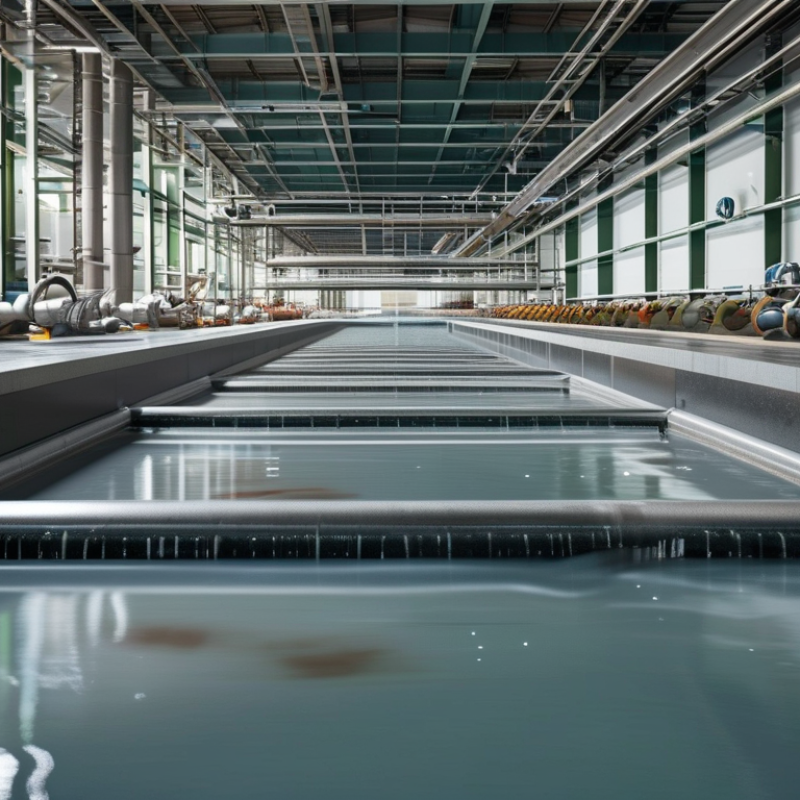
A sewage treatment plant, or STP, removes solids, organic matter, nutrients, and pathogens from wastewater. The process begins with coarse screening. Screens catch rags, plastics, and other large debris before pumps and tanks. Grit chambers then settle sand, glass, and small stones. These materials can damage mechanical equipment.
Flow usually enters an equalization tank. This tank reduces sudden changes in volume and pollution strength. The biological stage follows. Aeration tanks supply oxygen to microorganisms, which consume dissolved organic matter. Operators must control oxygen, sludge age, temperature, and pH. Small changes matter. Too much aeration wastes energy. Too little oxygen can weaken treatment performance.
Secondary clarifiers separate biological sludge from treated water. Part of the settled sludge returns to the aeration tank. The remaining sludge requires thickening, dewatering, and safe handling. Disinfection may use ultraviolet light, chlorine, or another verified method. Final water quality depends on contact time, equipment condition, and regular testing. A clear outlet does not always mean safe water.
Good STP plant process suppliers should explain hydraulic design, material quality, control systems, and maintenance access. Their technical documents should match local influent data, not copied assumptions. Site experience helps identify practical problems, such as blocked screens or poor sludge removal. No design is perfect. Seasonal rain, industrial discharge, and operator errors can still disturb performance. Continuous records and honest inspections reveal what drawings cannot.
Top 10 China STP Plant Process Suppliers - STP Plant Process Basics and Treatment Stages
The table summarizes ten commonly specified sewage treatment plant process stages and selection considerations used in municipal, commercial, industrial, and decentralized wastewater projects. Operating ranges are indicative design values and must be verified through site surveys, influent testing, pilot trials, and applicable discharge requirements.
| No. | Treatment Stage | Primary Function | Typical Equipment | Indicative Operating Parameters | Main Contaminants Addressed | Typical Process Benefit | Key Selection Considerations |
|---|---|---|---|---|---|---|---|
| 1 | Preliminary Screening | Removes large solids and coarse debris before downstream treatment. | Coarse screen, fine screen, screen compactor, screenings washer | Coarse openings: approximately 15–50 mm; fine openings: approximately 1–10 mm | Rags, plastics, wipes, wood, stones, and other floating debris | Protects pumps, pipes, mixers, membranes, and aeration equipment from blockage or damage. | Screen opening, hydraulic capacity, automatic cleaning frequency, screenings handling, and bypass provisions |
| 2 | Grit and Oil Removal | Separates dense inorganic particles and floating oils or grease. | Grit chamber, vortex grit separator, grit classifier, grease trap, skimmer | Designed to retain mineral grit while allowing most organic solids to remain in suspension | Sand, gravel, glass particles, coffee grounds, fats, oils, and grease | Reduces abrasion, sediment accumulation, pipe deposits, and interference with biological treatment. | Required detention time, grit particle size, grease loading, odor control, and ease of maintenance |
| 3 | Equalization | Balances variations in wastewater flow, concentration, temperature, and pH. | Equalization tank, submersible mixer, transfer pumps, pH monitoring system | Commonly sized for several hours of flow balancing, depending on the daily profile | Flow peaks, shock organic loads, pH fluctuations, and intermittent discharges | Improves process stability and prevents hydraulic or toxic-load shocks to biological units. | Tank volume, mixing intensity, odor prevention, standby capacity, level control, and emergency storage |
| 4 | Primary Sedimentation | Settles readily removable suspended solids and captures part of the settleable organic load. | Primary clarifier, circular sedimentation tank, chain-and-flight scraper, sludge hopper | Typical surface overflow rates are selected according to flow, solids loading, and settling characteristics | Settleable solids, suspended solids, and a portion of biochemical oxygen demand | Reduces the solids and organic load entering biological treatment. | Peak flow rate, sludge withdrawal frequency, hydraulic short-circuiting, scum removal, and footprint |
| 5 | Activated Sludge Aeration | Uses aerobic microorganisms to biodegrade dissolved and colloidal organic matter. | Aeration basin, fine-bubble diffusers, blowers, dissolved oxygen controller, return sludge pumps | Dissolved oxygen is commonly controlled around 1.5–3.0 mg/L for conventional carbon removal, subject to process design | Biochemical oxygen demand, chemical oxygen demand fractions, and biodegradable soluble organics | Provides the main biological reduction of organic pollution. | Organic loading, oxygen transfer efficiency, sludge age, mixed liquor concentration, temperature, and energy use |
| 6 | Biological Nitrogen Removal | Converts ammonia to nitrate and biologically reduces nitrate to nitrogen gas. | Anoxic tank, aerobic tank, internal recycle pump, mixers, online ammonia and nitrate analyzers | Requires alternating aerobic and anoxic conditions; internal nitrate recycle is commonly applied | Ammonia nitrogen, total nitrogen, and biodegradable nitrogen compounds | Supports compliance with nitrogen discharge limits and reduces nutrient-related impacts. | Alkalinity availability, carbon source, recycle ratio, temperature, sludge age, and oxygen carryover to anoxic zones |
| 7 | Biological Phosphorus Removal | Encourages phosphorus-accumulating organisms to take up and remove phosphorus with waste sludge. | Anaerobic selector, anoxic zone, aerobic zone, mixers, return activated sludge system | Requires a suitable anaerobic-to-aerobic sequence and sufficient readily biodegradable carbon | Orthophosphate and total phosphorus | Reduces phosphorus without relying solely on chemical precipitation. | Influent carbon-to-phosphorus ratio, nitrate leakage into anaerobic zones, sludge wasting strategy, and seasonal temperature |
| 8 | Secondary Clarification | Separates biological flocs from treated water and returns settled biomass to the process. | Secondary clarifier, suction header, scraper bridge, return activated sludge pumps, waste sludge pumps | Performance depends on solids loading, settling velocity, sludge volume index, and peak hydraulic flow | Biological solids, suspended solids, and residual particulate organic matter | Produces clarified effluent and maintains the required biomass concentration in the aeration system. | Clarifier area, solids flux, weir loading, sludge blanket control, scum removal, and storm-flow management |
| 9 | Tertiary Filtration | Polishes secondary effluent by removing fine suspended particles and, in some designs, additional nutrients. | Disc filter, sand filter, cloth media filter, pressure filter, backwash system | Filtration rate and backwash frequency are determined by influent solids and required effluent quality | Fine suspended solids, turbidity, residual phosphorus, and particle-bound contaminants | Improves clarity and prepares effluent for disinfection, reuse, or stricter discharge standards. | Target effluent turbidity, solids loading, headloss, backwash water demand, automation, and available footprint |
| 10 | Disinfection and Sludge Handling | Inactivates pathogens and conditions, thickens, dewaters, and manages excess sludge. | Ultraviolet system or chlorination unit, contact tank, sludge thickener, centrifuge, belt filter press | UV dose or disinfectant contact conditions are selected according to flow and microbiological targets | Pathogenic microorganisms, excess biological solids, and water contained in waste sludge | Enables safer discharge or reuse while reducing sludge volume for transport and final disposal. | Effluent UV transmittance, residual disinfectant requirements, chemical safety, cake dryness, odor control, and disposal route |
Related Posts
-

What is the Role of Waste Water Treatment Plants in Sustainable Water Management?
-
Innovative Solutions for Effective Industrial Waste Water Treatment Systems
-
Top 10 Waste Water Treatment Systems Revolutionizing Water Management with 70 Percent Efficiency Improvement
-
8 Best Sewage Treatment Plant Processes to Optimize Waste Management Efficiency
-

How to Design and Optimize a Sewer Treatment Plant for Maximum Efficiency
-
Essential Tips for Efficient Wastewater Treatment Plant Operations