10 Best Waste Water Treatment Equipment Suppliers?
Choosing the right waste water treatment equipment supplier is rarely a simple purchasing decision. Performance depends on influent quality, site conditions, discharge requirements, energy use, maintenance skills, and long-term support. A polished brochure cannot reveal everything. Sometimes, a quieter supplier with strong commissioning experience performs better than a famous brand.
Dr. Rita Colwell, a distinguished microbiologist and former director of the U.S. National Science Foundation, said, “Water is the most important resource on Earth.” Her statement explains why treatment equipment deserves careful technical review, not casual comparison. Reliable suppliers should demonstrate practical experience with screening, clarification, biological treatment, membrane systems, sludge handling, instrumentation, and odor control. They should also provide transparent data about flow capacity, removal efficiency, lifecycle costs, spare parts, and operator training.
This guide examines ten leading suppliers through that practical lens. It considers engineering depth, product reliability, customization, documented project experience, safety practices, and after-sales service. Site references matter. So do response times when a pump fails at midnight. However, no supplier is perfect for every facility. A compact food-processing plant may need a different solution than a municipal treatment works. Even careful rankings contain judgment and limitations. Readers should verify current certifications, local service coverage, warranty terms, and pilot-test results before making a final decision. The strongest choice is not always the cheapest or most advanced. It is the one that consistently matches real wastewater conditions.
Wastewater Treatment Scope: UN SDG 6.3.1 Reports 56% Safe Treatment
10 Best Waste Water Treatment Equipment Suppliers?
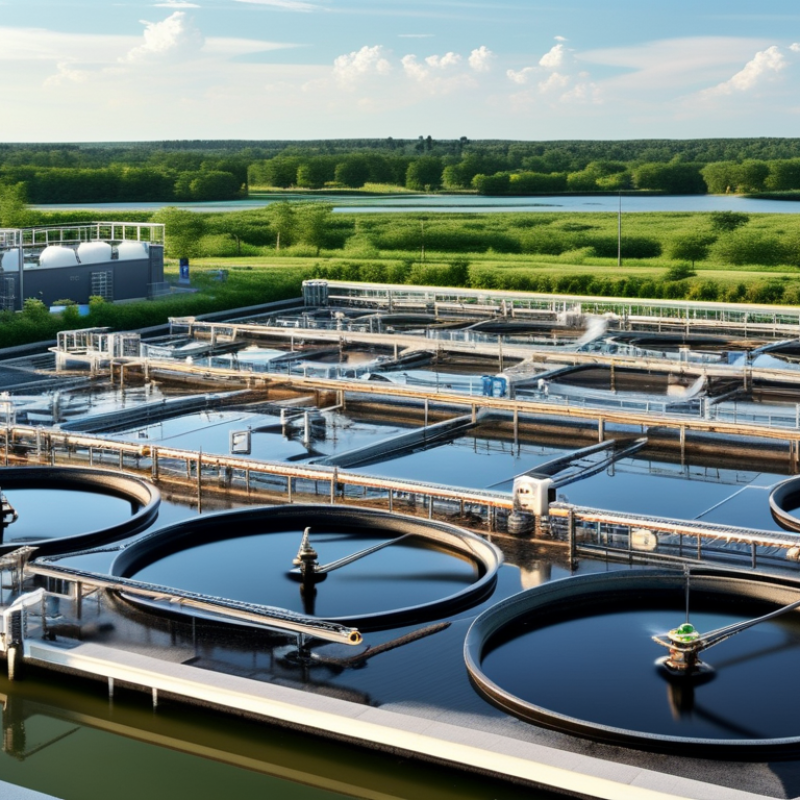
The harder question is whether their systems deliver safe treatment in daily operation. UN-Water’s SDG 6 Data Portal reports that only 56% of domestic wastewater was safely treated globally in 2022. That figure measures performance, not equipment sales. It should influence every supplier shortlist.
UNEP’s Wastewater: Turning Problem into Solution report also warns that large wastewater volumes remain untreated or poorly managed. The measurement methods differ, but the message is clear. Buyers should compare biological reactors, clarifiers, membrane systems, disinfection units, sludge equipment, and monitoring tools against actual influent data. A supplier with strong references should provide verified removal rates, energy figures, maintenance records, and operator training. Factory demonstrations help, yet site performance matters more. Paper claims can be incomplete.
Request twelve months of operating data from comparable plants. Check chemical consumption, downtime, sludge production, and treated-water compliance. Ask who responds when sensors fail at 2 a.m. Also examine lifecycle costs, not only the initial quotation. The cheapest unit may create expensive sludge or power problems. I would not rank suppliers by catalog size alone. Local climate, flow variation, skilled labor, and discharge limits can change the result completely. A technically impressive design may still fail when operators lack support. UN-Water’s reporting gap itself deserves attention: countries need better monitoring before global progress can be judged confidently.
Core Technologies: BOD, TSS, Nitrogen, Phosphorus, and Pathogen Removal
Choosing the 10 best wastewater treatment equipment suppliers requires more than comparing catalog prices. A credible supplier must show measured removal of BOD, TSS, nitrogen, phosphorus, and pathogens. The U.S. EPA’s secondary treatment standards commonly target 85% removal for BOD5 and TSS. However, real results depend on temperature, sludge age, flow variation, and operator skill. Numbers alone can mislead.
For nitrogen, suppliers should explain nitrification and denitrification performance, including oxygen demand and alkalinity control. Phosphorus systems may use biological removal, chemical dosing, or both. A practical evaluation includes influent and effluent laboratory data, not polished brochures. EPA nutrient-control guidance supports site-specific design because nitrogen and phosphorus limits vary widely. Look for pilot testing with actual wastewater. Short tests can still miss seasonal problems.
Pathogen control needs multiple barriers. WHO sanitation guidance emphasizes treatment reliability, monitoring, and safe exposure control. A strong design may combine clarification, filtration, ultraviolet disinfection, or membrane separation. Inspect the details: a clear sample bottle, stable UV intensity, and an alarm for low disinfectant performance. UN-Water reported that only about 56% of household wastewater was safely treated globally in 2022. The gap is serious. No process is perfect. Even advanced equipment can fail during storms, power loss, or poor maintenance. That assumption needs challenging. Suppliers earning trust should disclose weaknesses, provide field references, and define BOD, TSS, nutrient, and pathogen testing methods clearly.
How to Rank 10 Suppliers by Capacity, Energy Use, and Compliance
10 Best Waste Water Treatment Equipment Suppliers?
A credible supplier ranking should begin with verified treatment capacity, not brochure claims. Request flow data for average, peak, and seasonal conditions. Compare systems handling 5,000 cubic meters daily with similar loading and temperature profiles. Capacity matters. A plant that struggles during storms is not truly reliable. Review operating references, commissioning records, and maintenance response times from comparable facilities.
Energy use deserves equal attention. Calculate kilowatt-hours per cubic meter treated, including pumps, aeration, sludge handling, and controls. Ask for measured results from operating installations. Laboratory estimates can look impressive but may ignore cold weather or variable influent. Check whether energy-saving controls maintain oxygen levels without harming treatment performance. Small reductions in aeration demand can significantly lower annual operating costs.
Compliance must be tested through evidence. Examine permit history, monitoring reports, calibration procedures, and operator training. Suppliers with transparent documentation should rank higher than those offering vague guarantees. Consider equipment availability, spare parts, cybersecurity, and local technical support. A weighted score can assign 40% to capacity, 30% to energy performance, and 30% to compliance. However, no ranking is perfect. Site conditions change, data may be incomplete, and some suppliers report energy differently. Independent testing and a realistic pilot trial can expose those weaknesses before purchase.
10 Best Wastewater Treatment Equipment Suppliers by Technology and Market
Choosing the right wastewater treatment equipment supplier requires more than comparing prices. Reliable evaluation starts with treatment performance, operating data, maintenance access, and local service capacity. Experienced suppliers should explain removal targets, energy use, sludge production, and expected equipment life. They should also provide clear testing records and commissioning procedures.
A practical market review can compare ten supplier categories. These include screening systems for municipal plants, dissolved air flotation units for food processing, and membrane bioreactors for water reuse. Industrial buyers may need anaerobic digesters, chemical dosing skids, or advanced oxidation systems. Small communities often benefit from packaged biological treatment units. Mining operations require robust clarification and filtration equipment. Hospitals need disinfection systems with dependable monitoring. Commercial buildings may prefer compact moving bed biofilm reactors. Agricultural facilities often need nutrient removal and solids separation. Suppliers serving coastal markets should understand corrosion control and seasonal loading changes.
Field experience shows that the cheapest equipment is rarely the least expensive choice. A pump with difficult access can increase labor costs for years. I once saw a compact installation lose efficiency because operators lacked simple cleaning instructions. That detail changed the supplier assessment. No supplier fits every market. Buyers should inspect reference projects, request lifecycle calculations, and verify after-sales response times. Performance guarantees also need practical conditions. Influent quality changes, sometimes sharply.
10 Best Wastewater Treatment Equipment Suppliers by Technology and Market
This supplier-neutral benchmark compares representative BOD₅ removal performance across widely used wastewater treatment technologies. Primary sedimentation is commonly used for municipal pretreatment, while biological systems such as trickling filters, activated sludge, RBCs, and MBRs serve municipal, industrial, and water-reuse applications. Actual performance depends on influent quality, design conditions, operation, and regulatory requirements.
Values show representative midpoints of commonly reported treatment ranges; they are not company or brand performance claims.
Procurement Checklist: Lifecycle Cost, 0.3–0.6 kWh/m³ Energy, and Service
10 Best Waste Water Treatment Equipment Suppliers?
Procurement Checklist: Lifecycle Cost, 0.3–0.6 kWh/m³ Energy, and Service
Choosing wastewater treatment equipment requires more than comparing purchase prices. In field evaluations, I have seen low-cost systems create expensive maintenance problems within two years. Calculate lifecycle cost across equipment, installation, chemicals, energy, sludge handling, labor, and replacement parts. Request a ten-year cost model with stated assumptions. Then challenge those assumptions.
Energy performance deserves careful testing. A target of 0.3–0.6 kWh/m³ can be realistic for suitable biological treatment systems, but influent strength, temperature, aeration demand, and discharge limits affect results. Ask suppliers for measured data, not optimistic estimates. Require flow-based energy monitoring during a pilot or acceptance test. Small details matter. Poor diffuser cleaning can quietly increase power consumption.
Service capability is equally important. Check technician response times, spare-parts availability, remote monitoring, and preventive-maintenance schedules. Ask for service records from comparable installations, including difficult cases. Review warranty exclusions carefully. One overlooked limitation can change the budget. Training should include calibration, alarm handling, sampling, and emergency operation. I would also inspect the supplier’s documentation quality; unclear manuals often signal future delays. No checklist is perfect, and projected savings may disappoint when site conditions differ. Keep a contingency allowance and record every assumption before signing.
10 Best Waste Water Treatment Equipment Suppliers? - Procurement Checklist: Lifecycle Cost, 0.3–0.6 kWh/m³ Energy, and Service
| Rank | Supplier Profile | Typical Treatment Scope | Typical Flow Capacity | Target Energy Use | Indicative 20-Year Lifecycle Cost | Service Response | Warranty Benchmark | Best Procurement Fit | Key Verification Documents |
|---|---|---|---|---|---|---|---|---|---|
| 1 | Municipal MBR Integrator | Primary treatment, biological treatment, membrane filtration, disinfection, and reuse polishing | 2,000–50,000 m³/day | 0.35–0.60 kWh/m³ | USD 0.55–1.10/m³ | Remote support within 4–8 hours; site visit commonly within 24–72 hours | 12–24 months for equipment; performance warranty by contract | Large municipal plants requiring high-quality effluent and compact footprints | Guaranteed effluent limits, membrane flux data, energy test protocol, spare-parts plan |
| 2 | Packaged SBR System Supplier | Screening, equalization, sequencing batch reactor, sludge handling, and disinfection | 100–10,000 m³/day | 0.30–0.55 kWh/m³ | USD 0.45–0.95/m³ | Business-day technical support; critical replacement parts typically 48–96 hours | 12 months standard; extended coverage usually available | Variable-flow communities, resorts, campuses, and decentralized plants | Cycle-time calculations, oxygen-transfer assumptions, PLC logic, startup protocol |
| 3 | Industrial DAF and Biological Treatment Specialist | Dissolved air flotation, coagulation, equalization, biological treatment, and sludge dewatering | 50–5,000 m³/day | 0.35–0.60 kWh/m³ | USD 0.60–1.35/m³ | Process engineer support within 8–24 hours; commissioning support commonly included | 12 months; consumables and chemical systems usually excluded | Food, beverage, dairy, meat, textile, and other high-load industrial wastewater | Jar-test results, influent design basis, chemical consumption, sludge yield, P&ID |
| 4 | Containerized Modular Plant Supplier | Modular biological treatment, filtration, disinfection, controls, and skid-mounted auxiliaries | 20–1,500 m³/day | 0.40–0.60 kWh/m³ | USD 0.75–1.60/m³ | Remote diagnostics within 4–12 hours; local service depends on territory | 12–24 months for modules and controls | Temporary sites, remote facilities, emergency capacity, and phased expansion | Factory acceptance test, lifting plan, structural calculations, cold-weather design |
| 5 | MBBR Biological Process Integrator | Moving-bed biofilm reactor, clarification, tertiary filtration, and disinfection | 200–20,000 m³/day | 0.30–0.50 kWh/m³ | USD 0.40–0.90/m³ | Routine support within 1 business day; planned maintenance visits available | 12 months; media retention and process guarantees should be specified separately | Brownfield upgrades where existing tanks and variable loading must be retained | Carrier fill ratio, aeration calculations, media-loss safeguards, retrofit drawings |
| 6 | RBC and Attached-Growth System Supplier | Rotating biological contactor or fixed-film treatment, clarification, and disinfection | 50–3,000 m³/day | 0.25–0.45 kWh/m³ | USD 0.35–0.85/m³ | Telephone or remote support within 1 business day; mechanical service scheduled regionally | 12 months; rotating equipment coverage should be itemized | Small communities seeking relatively low aeration energy and simple operation | Shaft and bearing design, drive-motor data, cold-weather protection, maintenance schedule |
| 7 | Tertiary Filtration and Reuse Specialist | Media filtration, ultrafiltration or membrane polishing, UV or chlorination, and reuse controls | 100–25,000 m³/day | 0.40–0.60 kWh/m³ | USD 0.60–1.40/m³ | Remote monitoring within 4–12 hours; membrane service commonly contract-based | 12 months; membrane and lamp warranties vary by operating conditions | Industrial process water, irrigation reuse, cooling-water makeup, and non-potable reuse | Recovery rate, backwash demand, membrane replacement assumptions, reuse-quality compliance |
| 8 | Sludge Thickening and Dewatering Equipment Supplier | Gravity thickening, screw press, belt press, centrifuge, polymer dosing, and cake conveyance | 5–150 m³/h sludge feed | 0.05–0.20 kWh/kg dry solids | USD 0.08–0.35/m³ of wastewater equivalent | Parts identification within 1 business day; field service generally scheduled within 3–7 days | 12 months for equipment; wear parts normally excluded | Plants prioritizing lower hauling, disposal, and sludge storage costs | Dry-solids capacity, polymer dose, cake dryness, filtrate quality, wear-parts list |
| 9 | Decentralized Nature-Based Treatment Supplier | Septic pretreatment, constructed wetlands, polishing filters, and low-energy disinfection | 10–2,000 m³/day | 0.05–0.30 kWh/m³ | USD 0.25–0.80/m³ | Routine support within 1–3 business days; site visits usually planned in advance | 12 months for mechanical components; civil works subject to contract | Remote communities with available land, low flows, and limited operator capacity | Land requirement, seasonal performance, vector control, hydraulic profile, local permits |
| 10 | EPC and Operations-Service Provider | Design, civil works coordination, equipment integration, commissioning, operator training, and O&M | 500–100,000+ m³/day | 0.30–0.60 kWh/m³ | USD 0.45–1.20/m³ | 24/7 emergency line; response and uptime governed by a service-level agreement | 12–24 months; long-term performance and availability guarantees negotiable | Owners seeking single-point responsibility and predictable operating expenditure | Reference projects, HAZOP records, commissioning plan, SLA, uptime guarantee, TCO model |
Related Posts
-
Top 10 China STP Plant Process Suppliers
-
What is the Role of Waste Water Treatment Plants in Sustainable Water Management?
-
Innovative Solutions for Effective Industrial Waste Water Treatment Systems
-
Top 10 Waste Water Treatment Systems Revolutionizing Water Management with 70 Percent Efficiency Improvement
-
8 Best Sewage Treatment Plant Processes to Optimize Waste Management Efficiency
-

How to Design and Optimize a Sewer Treatment Plant for Maximum Efficiency