
2026 Top Sewer Treatment Plant Types for Global Buyers
Choosing the right sewer treatment plant is a practical decision, not a catalog exercise. Global buyers must compare influent quality, discharge requirements, land availability, climate, energy costs, and operator skills. A plant that performs well in a cool European region may struggle under tropical temperatures or unstable electricity supplies.
This guide introduces major treatment options, including activated sludge, sequencing batch reactors, MBBR systems, membrane bioreactors, trickling filters, and packaged plants. Each type offers different strengths. SBR systems can support flexible batch operation. MBBR units often provide stable biological treatment in compact footprints. MBR technology can deliver high-quality effluent, but membrane cleaning and replacement require careful budgeting. Packaged plants may simplify installation for smaller communities or industrial sites.
Real projects are rarely perfect. Influent flows change during storms, maintenance delays happen, and laboratory data may be incomplete. These details matter. Experienced buyers should request verified performance records, clear process guarantees, lifecycle cost estimates, and local service support. Independent testing and a site-specific design review remain valuable, even when a supplier presents impressive figures.
This overview focuses on practical selection. It considers treatment performance, operating complexity, expansion potential, resilience, and long-term reliability. Local regulations must guide the final design. There is no universal winner. The most suitable sewer treatment plant is the one that matches actual wastewater conditions, available resources, and responsible environmental management.
Sewer Treatment Plant Basics and Core Treatment Functions
2026 Top Sewer Treatment Plant Types for Global Buyers
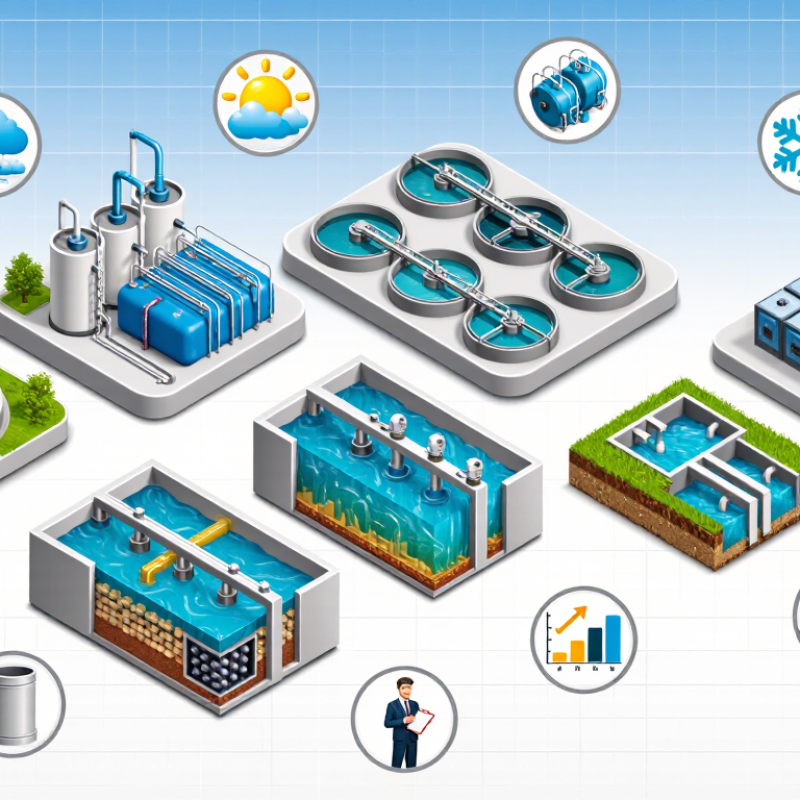
Sewer treatment plants protect waterways by removing solids, organic matter, nutrients, and pathogens. Screening comes first. Bar screens capture rags, plastics, and coarse debris before pumps or biological tanks. Primary settling then removes heavier particles, reducing the load on later processes. The UN-Water SDG 6 Synthesis Report 2023 reported that 42% of household wastewater was not safely treated in 2022. This gap makes basic process reliability more important than impressive equipment lists. Flow variation, seasonal temperature, and influent strength can change performance within hours.
Biological treatment uses microorganisms to consume dissolved organic pollutants. Aeration tanks need careful oxygen control, because excess air increases energy use. Anoxic and anaerobic zones can support nitrogen and phosphorus removal. Secondary clarifiers separate biological flocs from treated water. Tertiary units, such as filtration and disinfection, provide additional protection for sensitive rivers or reuse applications. The WHO and UNICEF Joint Monitoring Programme reported that 3.5 billion people lacked safely managed sanitation in 2022. That figure shows why modular and decentralized systems may suit smaller communities, remote sites, or fast-growing districts. Yet “compact” does not mean maintenance-free. Operators still need laboratory checks, sludge handling, spare parts, and documented alarm responses. A weak point remains common: designs often assume steady flows, while real sewers receive stormwater, grease, and sudden industrial loads.
2026 Top Sewer Treatment Plant Types for Global Buyers - Sewer Treatment Plant Basics and Core Treatment Functions
| Plant Type | Typical Treatment Stage | Core Treatment Principle | Main Pollutants Addressed | Typical Process Configuration | Indicative Effluent Capability* | Best-Fit Applications | Key Buyer Considerations |
|---|---|---|---|---|---|---|---|
| Septic Tank System | Primary | Gravity settling, flotation, and anaerobic digestion inside a watertight tank. | Settleable solids, floatable matter, and part of the organic load. | Inlet screening, septic tank, effluent filter, and soil absorption or secondary treatment. | Usually requires additional soil or secondary treatment before discharge. | Individual homes, small rural properties, and locations without centralized sewer networks. | Soil permeability, groundwater protection, desludging frequency, hydraulic loading, and local sanitation rules. |
| Extended Aeration Activated Sludge Plant | Secondary | Long solids-retention biological aeration followed by secondary clarification. | Biodegradable BOD, suspended solids, and part of the ammonia load when nitrification is designed. | Screening, grit removal, aeration basin, secondary clarifier, return activated sludge, and sludge wasting. | Commonly designed for approximately 85–95% BOD removal and 85–95% TSS removal. | Residential communities, schools, hotels, offices, and small-to-medium municipal facilities. | Energy use for aeration, operator skill, sludge wasting, odor control, and peak-flow management. |
| Sequencing Batch Reactor (SBR) | Secondary / Nutrient Removal | Fill-and-draw biological treatment in one reactor using timed aeration, anoxic, settling, and decant phases. | BOD, COD, suspended solids, ammonia, nitrate, and sometimes phosphorus. | Screening, equalization when required, SBR basin, decanter, sludge handling, and disinfection if needed. | Typically capable of about 85–95% BOD removal; nitrogen performance depends on cycle design. | Variable-flow communities, packaged plants, remote sites, and projects requiring a compact layout. | Control-system reliability, decanting equipment, cycle timing, equalization needs, and standby capacity. |
| Membrane Bioreactor (MBR) | Secondary / Tertiary | Biological treatment combined with membrane filtration, generally microfiltration or ultrafiltration. | BOD, COD, suspended solids, bacteria, and a substantial portion of pathogens. | Fine screening, biological reactor, submerged or external membranes, permeate pumping, and sludge handling. | Often produces very low suspended solids and turbidity; nutrient removal requires dedicated biological zones. | Water reuse, urban infill, commercial developments, industrial parks, and sites with limited land. | Membrane fouling, pretreatment quality, energy demand, cleaning chemicals, replacement cost, and operator training. |
| Moving Bed Biofilm Reactor (MBBR) | Secondary | Attached-growth microorganisms develop on suspended carrier media in an aerated or anoxic reactor. | BOD, COD, ammonia, and nitrate when anoxic denitrification zones are included. | Screening, aerated or anoxic MBBR tanks, media-retention screens, clarification or filtration, and sludge handling. | BOD removal commonly reaches approximately 80–95%, depending on loading and downstream separation. | Municipal upgrades, decentralized plants, industrial pretreatment, and projects needing modular expansion. | Media filling ratio, aeration distribution, carrier retention, downstream solids separation, and hydraulic mixing. |
| Trickling Filter Plant | Secondary | Wastewater passes over fixed media supporting a microbial biofilm; air movement supplies oxygen. | Biodegradable organic matter, suspended solids after clarification, and ammonia in nitrifying designs. | Primary clarifier, distributor, packed media bed, recirculation system, secondary clarifier, and sludge handling. | Approximately 75–90% BOD removal is common for complete systems; nitrification depends on temperature and loading. | Small and medium communities seeking relatively simple, robust biological treatment. | Land area, hydraulic distribution, media condition, flies and odor, recirculation pumping, and cold-weather performance. |
| Rotating Biological Contactor (RBC) | Secondary | Partially submerged rotating discs support a biofilm that alternately contacts wastewater and atmospheric oxygen. | BOD, COD, ammonia, and suspended solids after final clarification. | Primary treatment, rotating disc stages, secondary clarifier, sludge return or wasting, and disinfection if required. | Designed systems may achieve roughly 85–95% BOD removal, subject to loading and temperature. | Small communities, resorts, institutions, and decentralized facilities with moderate flow variation. | Mechanical drive protection, shaft loading, cover and ventilation, cold-weather effects, and replacement of damaged media. |
| Anaerobic Treatment Plant | Primary / Secondary | Microorganisms degrade organic matter without oxygen, producing biogas and stabilized sludge. | High-strength biodegradable COD, BOD, and suspended solids; limited direct pathogen removal. | Screening, equalization, anaerobic digester or high-rate reactor, gas collection, and downstream aerobic polishing. | High-rate systems can achieve substantial COD removal, but final discharge usually needs aerobic polishing. | High-strength municipal or industrial wastewater, warm climates, and facilities seeking biogas recovery. | Temperature, alkalinity, toxic shocks, startup time, gas safety, odor control, and post-treatment requirements. |
| Constructed Wetland | Secondary / Tertiary | Plant roots, filter media, microbial biofilms, sedimentation, and natural biochemical processes remove pollutants. | BOD, suspended solids, nitrogen, phosphorus to a variable extent, and some pathogens. | Preliminary treatment, septic or primary settling, vertical-flow or horizontal-flow wetland cells, and polishing. | Performance varies widely; effective design and pretreatment are essential for consistent BOD and TSS removal. | Rural communities, ecological developments, small facilities, and locations with available land. | Land requirement, seasonal performance, vegetation management, mosquito control, hydraulic short-circuiting, and pretreatment. |
| Advanced Nutrient Removal Plant | Tertiary / Advanced | Controlled aerobic and anoxic biological zones, with chemical phosphorus removal when required. | Nitrogen, phosphorus, BOD, COD, suspended solids, and eutrophication-causing nutrients. | Preliminary treatment, anaerobic/anoxic/aerobic zones, secondary clarification, filtration, chemical dosing, and disinfection. | Effluent nutrient limits depend on process design, temperature, influent variability, and regulatory targets. | Sensitive watersheds, coastal discharge, lakes and reservoirs, and projects with strict nutrient permits. | Internal recycle control, carbon availability, chemical storage, sludge production, instrumentation, and compliance monitoring. |
| Tertiary Filtration and Disinfection Plant | Tertiary | Physical polishing and pathogen inactivation after biological treatment. | Fine suspended solids, residual turbidity, bacteria, viruses, and protozoa depending on the disinfection method. | Cloth, sand, or media filtration followed by ultraviolet light, chlorination, ozonation, or a combined system. | Can support low-turbidity, disinfected effluent when upstream treatment and operating controls are adequate. | Public access reuse, irrigation, industrial reuse, discharge to sensitive waters, and water-reclamation projects. | UV transmittance, chlorine contact time, residual management, filtration backwash, power supply, and reuse standards. |
| Sludge Treatment and Resource-Recovery Plant | Residuals Management | Thickening, stabilization, dewatering, drying, digestion, and potential recovery of energy or nutrients. | Water content, biodegradable solids, pathogens, odors, and residual organic matter. | Gravity or mechanical thickening, anaerobic or aerobic stabilization, dewatering, drying, and beneficial-use preparation. | Dewatering commonly reduces sludge volume substantially; final quality depends on stabilization and local rules. | Medium-to-large municipal plants and facilities requiring lower disposal cost or resource recovery. | Solids characteristics, polymer consumption, odor, hauling logistics, biogas safety, land application rules, and resilience. |
*Indicative capabilities are general engineering ranges rather than guaranteed results. Actual performance depends on influent characteristics, flow variation, temperature, process sizing, operation, maintenance, and applicable discharge or reuse regulations.
Related Posts
-
How to Choose the Right Sewer Treatment Plant?
-
How to Choose a Sewage Water Treatment System in 2026?
-
What Is a Waste Water Treatment Plant and How Does It Work?
-
What Are the Top China Sewer Treatment Plant Suppliers?
-
Top Industrial Waste Water Treatment Systems Worldwide?
-
2026 Top Industrial Waste Water Treatment Technologies