Top Industrial Waste Water Treatment Systems Worldwide?

Industrial waste water treatment systems are becoming critical infrastructure, not optional factory equipment. Manufacturing plants now face tighter discharge limits, water scarcity, and rising chemical costs. The World Bank’s report, Wastewater: From Waste to Resource, estimates that more than 80% of global wastewater is released without adequate treatment. That figure is disturbing. It also reveals a major recovery opportunity.

This introduction examines leading industrial waste water treatment systems used worldwide, including biological reactors, dissolved air flotation, membrane bioreactors, reverse osmosis, and advanced oxidation. Each technology performs differently. A food-processing facility may need grease removal and high-COD biological treatment. A semiconductor plant may require ultrapure water polishing and trace-contaminant control. A steel mill may prioritize metals removal, cooling-water recycling, and sludge management. Site conditions matter more than attractive equipment brochures.

Professor George Tchobanoglous, a widely respected wastewater-engineering expert, captured this shift clearly: “There is no such thing as wastewater; there is only water that is in the wrong place at the wrong time.” His observation supports a practical approach. Treatment should protect rivers, workers, production lines, and future water supplies. The UN World Water Development Report also links water quality, industrial growth, and resource security. Yet no worldwide ranking is completely objective. Energy prices, operator skills, local regulations, influent chemistry, and maintenance access can change the result. A system that performs beautifully in Germany may struggle beside a remote mining site. Real performance is measured at the outlet, not in the sales presentation.
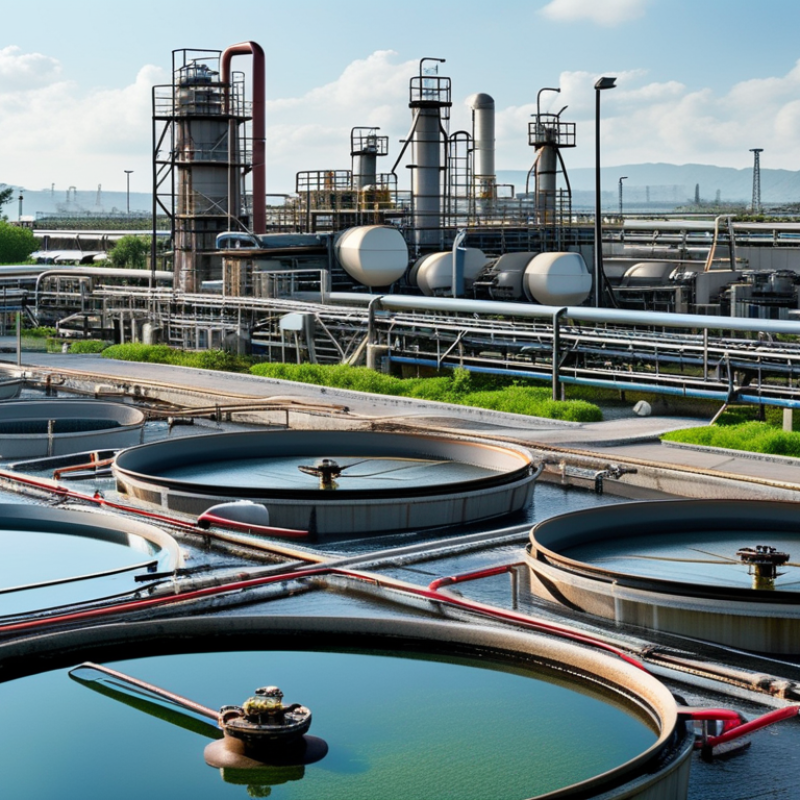
Top Industrial Waste Water Treatment Systems Worldwide?

Industrial Wastewater Classes: COD, BOD, TSS, Nutrients, and Metals

Industrial wastewater is not one uniform stream. Its class determines the treatment train, monitoring plan, and operating risk. UNEP’s 2023 report estimates that about 80% of global wastewater is discharged without adequate treatment. Industrial facilities therefore need sharper classification before selecting equipment.

COD measures chemically oxidizable matter, while BOD5 reflects biodegradable pollution over five days. A high COD-to-BOD ratio often signals resistant compounds or insufficient biological suitability.

TSS can clog membranes, reduce settling performance, and carry attached pollutants. Pretreatment may include screening, equalization, coagulation, and clarification. Small details matter, such as oily solids collecting beneath a surface skimmer.

Nutrients require closer control. Excess nitrogen and phosphorus can accelerate eutrophication, so biological nitrification, denitrification, or phosphorus removal may be necessary. Metals behave differently. They may require pH adjustment, precipitation, filtration, or selective adsorption. The U.S. EPA’s Effluent Guidelines program uses industry-specific pollutant data because generic limits can hide important variations. That principle is practical worldwide.

A single number can mislead. COD may fall while toxicity remains. Operators should combine laboratory tests, continuous sensors, toxicity checks, and sludge analysis.

Real plants also face temperature shifts, batch discharges, and uneven loading. Treatment models often look cleaner than operating reality. Regular sampling is still essential.

Primary Treatment Leaders: 50–70% TSS and 25–40% BOD Removal

Top Industrial Waste Water Treatment Systems Worldwide?

Primary treatment remains a practical front line for many industrial wastewater systems. It removes large solids, settleable particles, and part of the organic load before biological processing. The US EPA’s Wastewater Technology Fact Sheet: Primary Treatment reports typical removals of 50–70% for total suspended solids and 25–40% for BOD5. These figures are widely used as design benchmarks. Actual performance changes with particle size, temperature, retention time, and wastewater chemistry.

A well-operated system may include screening, grit removal, equalization, and primary clarification. In a metal-finishing facility, for example, a clarifier can capture dense solids after pH adjustment. In food processing, grease removal becomes equally important. The Water Environment Federation’s Design of Water Resource Recovery Facilities notes that hydraulic loading and settling characteristics strongly influence clarification results. Small changes matter. Excessive flow can carry solids over the weir. Poor sludge withdrawal can reduce effective volume.

These percentages should not become automatic promises. Industrial wastewater can contain emulsified oils, dissolved organics, or highly variable batches. Primary treatment may therefore achieve less than the reported range without chemical assistance. Operators should verify results through flow-proportional sampling, TSS testing, and five-day BOD analysis. The numbers look simple. The process is not.

Top Industrial Waste Water Treatment Systems Worldwide? - Primary Treatment Leaders: 50–70% TSS and 25–40% BOD Removal
Primary Treatment System Typical Industrial Applications Typical TSS Removal Typical BOD5 Removal Typical Hydraulic Criteria Main Solids or Residuals Key Operating Considerations
Primary Sedimentation Clarifier Food processing, municipal-industrial wastewater, pulp and paper, general manufacturing 50–70% 25–40% Hydraulic retention time: 1.5–2.5 hours
Surface overflow rate: 20–50 m³/m²·day
Primary sludge, typically containing settleable organic and inorganic solids Performance depends on particle size, wastewater temperature, flow variation, and sludge withdrawal frequency.
Chemically Enhanced Primary Treatment High-solids food and beverage wastewater, textile wastewater, industrial parks, wastewater with colloidal particles 70–90% 40–60% Coagulation and flocculation commonly followed by clarification;
contact time often 15–40 minutes
Chemical sludge with higher solids production than conventional clarification Coagulant and polymer doses require jar testing; chemical residuals and sludge disposal costs must be evaluated.
Dissolved Air Flotation (DAF) Edible oil and fat processing, dairy, meat processing, petrochemical wastewater, suspended oil removal 50–90% 20–50% Hydraulic loading rate: approximately 5–15 m³/m²·hour
Typical flotation contact and separation time: 20–45 minutes
Float sludge containing fats, oils, grease, and concentrated suspended solids Air-to-solids ratio, recycle pressure, chemical conditioning, and temperature strongly affect separation efficiency.
Lamella Plate Clarifier Metal finishing, mining, aggregate processing, surface treatment, compact industrial installations 60–90% 20–45% Effective settling area is increased by inclined plates;
commonly selected where a compact footprint is required
Concentrated settleable sludge requiring periodic removal Plate fouling, solids characteristics, access for cleaning, and upstream coagulation can control reliability.
API-Type Gravity Oil-Water Separator Refineries, fuel terminals, machinery plants, metalworking, industrial stormwater systems 40–70% 15–35% Low-turbulence gravity separation;
designed around oil droplet rise velocity and surface loading
Separated free oil, settled grit, and oily sludge Effective mainly for free oil and settleable solids; dissolved and emulsified oil generally requires additional treatment.
Primary Screening and Comminution Textile plants, food processing, municipal-industrial wastewater, wastewater containing large debris 5–20% Normally below 5% Coarse screening: approximately 6–50 mm openings
Fine screening: approximately 0.5–6 mm openings
Screenings, plastics, fibers, packaging material, and coarse debris Protects downstream pumps and clarifiers but is not a substitute for biological or chemical treatment.
Grit Removal Chamber Aggregate processing, food plants, wastewater with sand or mineral particles, industrial drainage systems 5–15% Normally below 5% Designed to remove dense inorganic particles, commonly around 0.2 mm and larger Sand, gravel, mineral grit, and other dense inorganic solids Controls abrasion and sediment accumulation; removal efficiency depends on flow velocity and particle density.
Equalization Basin with Primary Solids Capture Batch manufacturing, food and beverage facilities, chemical production, sites with highly variable flow or load 15–40% 10–25% Common equalization volume: approximately 4–24 hours of average flow Settled solids and screening residuals Reduces hydraulic and pollutant shock loads; mixing or aeration may be needed to prevent septic conditions.
Data scope: The removal efficiencies and design ranges shown are typical engineering values for preliminary comparison. Actual results vary with influent characteristics, particle size distribution, temperature, chemical dosing, hydraulic loading, sludge management, and operator control. TSS means total suspended solids; BOD5 means five-day biochemical oxygen demand.

Biological Treatment Leaders: MBR and SBR Achieve 85–95% BOD Removal

Top Industrial Waste Water Treatment Systems Worldwide?

Biological systems remain central to high-performing industrial wastewater treatment. Membrane bioreactors, or MBRs, combine biological degradation with membrane filtration. Sequencing batch reactors, or SBRs, treat wastewater through timed fill, react, settle, and decant cycles.

Under stable loading, both systems commonly achieve 85–95% BOD removal.

An influent concentration of 300 mg/L may leave approximately 15–45 mg/L after treatment.

Small changes matter. Temperature, toxicity, dissolved oxygen, and nutrient balance can quickly reduce removal efficiency.

MBR systems suit sites requiring compact footprints and consistently low suspended solids. Their membranes can produce clear effluent, but fouling control demands careful monitoring and regular cleaning.

SBR systems offer operational flexibility, especially where flow changes between production shifts. Operators can adjust aeration time and settling periods without rebuilding the entire process.

Field records often show strong results when equalization tanks protect biology from sudden chemical shocks. Performance is conditional. A high laboratory result may not survive an unsteady factory discharge, poor mixing, or neglected sensors.

This is where practical experience matters: daily checks of sludge color, oxygen levels, foam, and settling behavior can reveal problems before test results worsen.

Neither process is automatically superior. The right choice depends on wastewater chemistry, land availability, discharge limits, energy costs, and the operator’s ability to maintain stable biological conditions.

Advanced Reuse Systems: RO Recovers 75–85% of Feedwater

Top Industrial Waste Water Treatment Systems Worldwide?

Advanced reuse systems can recover 75–85% of industrial feedwater through reverse osmosis (RO). The exact rate depends on salinity, temperature, fouling potential, and pretreatment quality. It is not automatic.

A practical system may include clarification, multimedia filtration, cartridge filtration, and chemical conditioning before the RO stage. This sequence protects membranes from suspended solids, oil traces, and scale-forming minerals. Operators should monitor conductivity, pressure drop, permeate flow, and cleaning frequency. A sudden flow decline often signals fouling before water quality visibly changes. Good data matters.

The recovered permeate can support cooling towers, boiler makeup, washing lines, or process rinsing, depending on required quality. The remaining concentrate needs controlled handling and a site-specific disposal or further treatment plan. Pilot testing is valuable because laboratory water rarely matches daily factory conditions. Some projects promise 85% recovery, yet actual performance falls lower during seasonal temperature changes or unstable pretreatment. That gap deserves honest review. A reliable design leaves operating margin, trains staff, and records membrane performance over time.

Zero-Liquid-Discharge Systems: Over 95% Water Recovery at High Energy Demand

Industrial wastewater treatment systems are judged by more than discharge compliance. They must protect water supplies, stabilize production, and withstand changing contaminants. Zero-liquid-discharge systems can recover over 95% of process water. That figure is attractive. In practice, recovery depends on feed chemistry, pretreatment, and operating discipline. A site treating metal-bearing rinse water may need clarification, filtration, softening, and membrane separation before evaporation.

The final concentration stage usually relies on evaporators and crystallizers. These units remove remaining water and produce a dry or semi-dry salt stream. They also consume substantial heat and electricity. Energy demand can rise sharply when wastewater contains high dissolved solids or fluctuating flows. Operators should track conductivity, scaling indicators, vapor temperatures, and cleaning frequency. Small changes matter. Poor pretreatment can foul heat-transfer surfaces, increase downtime, and reduce recovery. Actual performance should be verified through mass balances, laboratory testing, and continuous monitoring.

From field experience, ZLD works best when engineers design around the entire water cycle, not one machine. Heat integration, waste heat, and automation can lower operating costs, but they cannot erase energy use. Salt quality also deserves attention because reuse or disposal routes may restrict its value. A practical design leaves room for uncertainty. Influent data is rarely perfect. Pilot trials may reveal unexpected scaling, corrosion, or seasonal changes. That inconvenience is useful.

Industrial Wastewater Treatment: Water Recovery vs. Energy Demand

Zero-liquid-discharge systems typically achieve more than 95% water recovery, but their thermal evaporation and crystallization stages require substantially more energy than biological treatment, membrane bioreactors, or reverse osmosis alone. The values shown are representative engineering benchmarks for industrial applications; actual performance varies with wastewater composition, salinity, temperature, and system design.