Top Wastewater Treatment Equipment Manufacturers Worldwide

Choosing among the top wastewater treatment equipment manufacturers worldwide requires more than comparing product catalogs. Across municipal plants, factories, and remote facilities, equipment must perform under changing flows, temperatures, and pollutant loads. Reliable waste water treatment equipment supports cleaner discharge, safer operations, and lower maintenance pressure. Yet performance depends on design, installation, and daily management. Not every impressive specification survives real plant conditions.

This introduction examines manufacturers through practical and technical criteria. It considers screening systems, clarifiers, biological reactors, membrane units, sludge dewatering machines, pumps, and control platforms. Field experience matters. Operators notice vibration, odor, blocked screens, and unstable readings before a brochure does. A pump may appear efficient, but poor access can make servicing expensive. A membrane system may deliver excellent clarity, but cleaning frequency can change its value. These details deserve careful attention. Independent testing, documented case studies, certifications, warranties, and responsive technical support also strengthen credibility. Still, company claims should be checked against site evidence and measurable results.

Manufacturers are compared by engineering depth, product reliability, energy use, adaptability, and after-sales service. Regional expertise can matter because wastewater standards and operating conditions vary widely. Some suppliers offer advanced automation, while others provide simpler systems that technicians can repair locally. That difference is important. A responsible purchasing decision should balance lifecycle cost, treatment performance, worker safety, and environmental goals. The strongest companies are not always the largest. They are the ones that explain limitations clearly and improve designs when conditions change. In practice, careful verification remains essential. Even this overview has limits, because no single manufacturer fits every project.
Top Wastewater Treatment Equipment Manufacturers Worldwide

What Wastewater Treatment Equipment Manufacturers Do

Wastewater treatment equipment manufacturers turn treatment goals into working systems. They design screens, pumps, clarifiers, biological reactors, filters, and sludge-handling units. Each component must match the wastewater’s flow, temperature, solids, and chemical load. The work is practical. Engineers review laboratory data, site conditions, and operator requirements before selecting equipment. They also calculate hydraulic capacity, energy use, maintenance access, and expected service life.

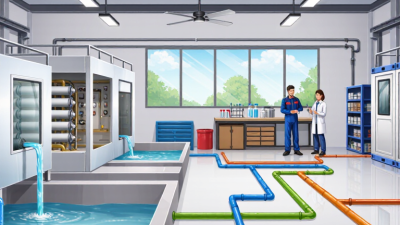
Manufacturers build equipment from materials suited to corrosion, abrasion, and continuous operation. They machine parts, assemble control panels, test moving components, and inspect welds. Factory testing may reveal vibration, leakage, poor alignment, or unstable controls. These findings matter before installation. Reliable manufacturers provide operating manuals, spare-parts guidance, training, and commissioning support. Their technical teams often adjust settings after observing real influent changes, rather than trusting design figures alone.

No design is perfect. A manufacturer can misjudge peak flow or underestimate grit accumulation. Experienced teams record these failures and revise future designs. They also help operators track dissolved oxygen, sludge concentration, pressure loss, and discharge quality. Clear records support safer decisions and more consistent performance. Compliance knowledge is essential, but equipment should not be chosen from paperwork alone. A compact unit may save space yet create difficult cleaning work. A powerful pump may improve flow while increasing energy costs. Honest manufacturers explain these trade-offs and recommend inspection schedules based on actual site conditions.

Main Types of Wastewater Treatment Equipment

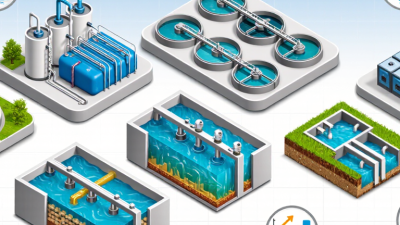
Wastewater treatment equipment removes different pollutants in stages. The right combination depends on flow, wastewater strength, temperature, and discharge requirements.

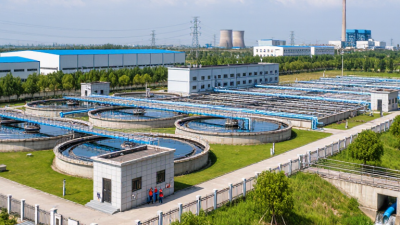
Screens capture rags, plastics, and other large solids before they damage pumps. Grit chambers then remove sand, glass, and small stones. Primary clarifiers slow the flow, allowing suspended solids to settle. These units protect downstream equipment and reduce unnecessary maintenance. Small details matter. A poorly adjusted screen can cause repeated blockages.

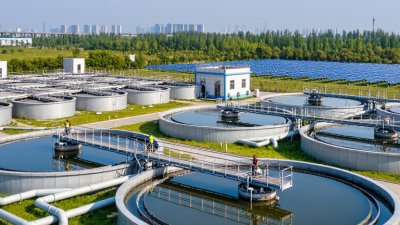
Biological treatment systems use microorganisms to reduce dissolved organic matter. Aeration tanks need controlled oxygen levels, mixing, and sufficient retention time. Too little oxygen weakens treatment, while excessive aeration wastes energy. Membrane bioreactors produce clearer effluent, but their membranes require careful cleaning and fouling control. Clarifiers remain practical where land and operating conditions allow.

Disinfection equipment, including ultraviolet systems or chemical dosing units, targets harmful microorganisms after major pollutants are removed. Sludge handling equipment thickens, dewaters, and sometimes stabilizes the remaining solids. Belt presses, screw presses, and centrifuges each perform differently with changing sludge characteristics. There is no universal equipment package. Operators must test influent conditions and review performance data regularly. Even experienced teams can overlook seasonal changes, especially during heavy rain or sudden industrial discharge. Consistent sampling, preventive inspections, and documented adjustments make treatment decisions more reliable.

Top Wastewater Treatment Equipment Manufacturers Worldwide - Main Types of Wastewater Treatment Equipment
Equipment Type Primary Treatment Function Typical Treatment Stage Typical Design Parameters Typical Performance or Removal Range Common Applications Key Selection Considerations
Coarse and Fine Screens Remove rags, plastics, fibers, and other large suspended solids before downstream equipment. Preliminary Coarse screen openings: approximately 6–50 mm.
Fine screen openings: approximately 0.5–6 mm.
Automatic cleaning is commonly used for higher flow rates.
Can remove most screenings larger than the selected opening size; removal efficiency depends on particle shape, loading, and screen cleaning frequency. Municipal sewage, industrial process wastewater, food processing, and wastewater containing fibrous or bulky solids. Hydraulic capacity, approach velocity, headloss, screenings handling, corrosion resistance, and protection of pumps and biological systems.
Grit Removal Equipment Separate sand, gravel, glass, eggshells, and other dense inorganic particles. Preliminary Typical horizontal-flow velocity: about 0.25–0.35 m/s.
Detention time is commonly around 30–60 seconds in constant-velocity systems.
Designed systems commonly target removal of grit particles around 0.15–0.20 mm and larger, depending on the selected process. Municipal wastewater, storm-influenced systems, and industrial wastewater with abrasive mineral solids. Particle size distribution, specific gravity, peak flow, vortex stability, odor control, and grit washing or classification requirements.
Equalization Tanks and Mixing Systems Balance flow, pollutant concentration, pH, temperature, and shock loads before subsequent treatment. Preliminary or primary Typical hydraulic retention time: approximately 6–24 hours, subject to flow variability and process objectives.
Mechanical or air mixing is used to prevent settling.
Does not primarily remove pollutants; it can significantly reduce peak-load variation and improve downstream process stability. Industrial wastewater, batch manufacturing, food and beverage facilities, and sites with highly variable discharge patterns. Tank volume, mixing energy, aeration needs, odor potential, pH control, emergency storage, and compatibility with corrosive wastewater.
Primary Clarifiers Settleable solids and floatable materials are separated by gravity before biological treatment. Primary Typical detention time: approximately 1.5–2.5 hours.
Typical surface overflow rate: approximately 25–50 m³/m²·day.
Commonly removes about 50–70% of suspended solids and 25–40% of biochemical oxygen demand, depending on wastewater characteristics. Municipal wastewater and industrial wastewater containing settleable organic solids. Peak hydraulic flow, sludge production, scum removal, surface loading, solids retention, and available footprint.
Dissolved Air Flotation Units Float fats, oils, grease, algae, and fine suspended solids to the surface for mechanical removal. Primary or polishing Recycle ratio commonly ranges from about 10–50%.
Pressurized air is released through microbubble generation systems.
Typical suspended-solids and oil-and-grease removal can reach approximately 70–95% with suitable chemical conditioning. Food processing, refineries, pulp and paper, textile wastewater, and industrial wastewater with low-density solids. Coagulant and polymer demand, air-to-solids ratio, hydraulic loading, sludge concentration, flotation tank design, and skimmer performance.
Conventional Activated-Sludge Systems Biologically oxidize dissolved and colloidal organic matter using suspended microbial growth. Secondary biological Typical aeration hydraulic retention time: about 4–12 hours.
Mixed-liquor suspended solids often range from 2–5 g/L.
Dissolved oxygen is commonly maintained near 1.5–3.0 mg/L.
With proper design and operation, BOD and suspended-solids removal commonly reaches approximately 85–95%. Municipal sewage and biodegradable industrial wastewater with relatively stable loading. Oxygen-transfer efficiency, sludge age, nutrient balance, return activated sludge rate, secondary clarifier capacity, and energy use.
Moving Bed Biofilm Reactor Systems Use suspended carrier media to support attached microbial growth for carbon and, when designed accordingly, nitrogen removal. Secondary biological Carrier filling fraction commonly ranges from 40–70% of reactor volume.
Dissolved oxygen often operates around 1.5–4.0 mg/L, depending on the treatment objective.
Organic-load removal commonly reaches approximately 80–95%; nitrification performance depends on temperature, media area, oxygen, and solids retention. Capacity upgrades, compact municipal plants, industrial wastewater, and applications requiring resistance to variable loading. Carrier protected surface area, retention screens, mixing, aeration distribution, media movement, and downstream solids separation.
Membrane Bioreactors Combine biological treatment with membrane filtration to produce low-solids effluent in a compact footprint. Secondary and advanced secondary Typical membrane flux: approximately 10–25 L/m²·h.
Mixed-liquor suspended solids commonly range from 8–15 g/L.
Membranes are usually microfiltration or ultrafiltration types.
Permeate commonly has very low suspended solids and turbidity; BOD removal is often above 95% when the biological process is properly operated. Water reuse, space-limited municipal plants, high-quality industrial effluent, and facilities requiring stable solids separation. Membrane fouling, pretreatment screening, air scouring, cleaning frequency, energy demand, membrane integrity, and sludge handling.
Granular or Multimedia Filters Remove residual suspended solids and reduce turbidity after biological or chemical treatment. Tertiary or polishing Typical filtration rate: approximately 5–15 m/h for many granular-media applications.
Backwashing is required when headloss or effluent quality reaches the operating limit.
Can commonly remove about 50–90% of remaining suspended solids, depending on influent quality and filter configuration. Municipal tertiary treatment, cooling-water reuse, industrial process-water polishing, and pretreatment for disinfection or membranes. Influent solids loading, media depth, filtration rate, backwash-water availability, pressure loss, and required effluent turbidity.
Ultraviolet Disinfection Systems Inactivate bacteria, viruses, and other microorganisms without adding a persistent chemical residual. Tertiary or final UV dose commonly falls around 30–60 mJ/cm² for many municipal disinfection objectives.
UV transmittance and lamp intensity must be monitored.
Can achieve approximately 2–4 log pathogen reduction when dose, UV transmittance, and hydraulic conditions are properly controlled. Municipal effluent discharge, water reuse, food-related applications, and wastewater systems where chemical residuals are undesirable. Effluent turbidity, UV transmittance, lamp fouling, lamp aging, flow distribution, power consumption, and validation requirements.
Ozone Contacting Systems Oxidize color, odor compounds, micropollutants, and difficult-to-biodegrade organic substances while providing disinfection. Advanced treatment Ozone dose often ranges from approximately 5–15 mg/L, but actual demand depends strongly on wastewater quality.
Off-gas destruction is required.
Can substantially reduce color and odor and provide broad oxidation; removal of specific micropollutants varies widely by compound and ozone exposure. Water reuse, textile wastewater, pharmaceutical wastewater, and advanced polishing of treated municipal effluent. Ozone demand, bromide formation risk, contact time, mass-transfer efficiency, off-gas safety, power use, and downstream biological filtration.
Sludge Dewatering Equipment Reduce sludge volume and increase solids concentration before transport, disposal, or further processing. Sludge treatment Screw presses commonly produce approximately 15–25% dry solids.
Centrifuges can commonly produce approximately 20–30% dry solids, depending on sludge type and conditioning.
Typical solids capture is approximately 90–99% when polymer conditioning and operating parameters are properly controlled. Municipal sludge, industrial biological sludge, primary sludge, and chemically conditioned waste sludge. Feed-solids concentration, polymer demand, cake dryness, centrate quality, energy consumption, noise, wash-water use, and maintenance access.
Note: The values shown are typical engineering ranges for preliminary comparison. Actual performance depends on wastewater characteristics, flow variation, temperature, chemical conditioning, equipment configuration, operating control, and applicable discharge or reuse requirements.

How to Evaluate Global Equipment Manufacturers

Evaluating wastewater treatment equipment manufacturers requires more than comparing catalog prices. Start with verified project experience in similar climates, influent conditions, and treatment capacities. Ask for operating data, not only design claims. Useful records include energy use, removal performance, maintenance frequency, and unplanned downtime. A manufacturer with strong engineering expertise should explain assumptions clearly. Vague answers deserve caution.

Visit an operating installation when possible. Look at sludge handling, control panels, pipe connections, and access for routine cleaning. Speak with operators, not only sales representatives. Check material compatibility, automation options, spare-parts availability, training, and local technical support. Independent certifications and documented testing can strengthen confidence, but certificates alone do not prove long-term performance. A polished brochure may still hide difficult maintenance.

Tips: Request a small pilot trial for uncertain wastewater. Compare total lifecycle cost, not purchase price. Review at least three references with similar loads. Ask who responds during a nighttime alarm. Also, challenge optimistic energy estimates. They may depend on perfect loading conditions. I have found that simple equipment is sometimes easier to operate, although this is not always the most efficient choice. Leave room for human error, seasonal variation, and future capacity changes. Your evaluation should reflect the plant’s real floor space, staff skills, discharge limits, and budget discipline.

Leading Wastewater Treatment Manufacturers by Technology

Top Wastewater Treatment Equipment Manufacturers Worldwide

Leading wastewater treatment manufacturers by technology are judged by process fit, not catalog size. Biological treatment remains central for municipal plants. Aeration tanks use microorganisms to reduce organic loads and nutrients. Manufacturers now pair fine-bubble systems with smart oxygen controls. This can lower energy use, although actual savings depend on wastewater strength and operator habits.

The UN World Water Development Report states that over 80% of global wastewater is discharged without treatment. That figure exposes a large need for reliable, scalable equipment.

Membrane technology serves plants needing high-quality effluent or water reuse. Ultrafiltration and reverse osmosis can remove fine solids, pathogens, and dissolved salts. However, membranes need careful pretreatment and cleaning. Poor operation can increase pressure, chemical use, and downtime.

Disinfection equipment uses ultraviolet light, ozone, or controlled chemical dosing. Sludge systems add thickening, dewatering, digestion, and sometimes nutrient recovery.

The International Water Association emphasizes resource recovery as a growing direction for circular water management. Still, not every site can justify advanced recovery equipment. Cost, land, electricity, and local skills matter more than impressive specifications.

Tips: Compare lifecycle cost, not only purchase price. Request pilot data using your wastewater. Check spare-part access and service response. Ask how performance changes during rain, cold weather, and flow surges. A polished guarantee may hide weak assumptions.

Key Trends Shaping the Global Wastewater Equipment Market

Top Wastewater Treatment Equipment Manufacturers Worldwide

Key Trends Shaping the Global Wastewater Equipment Market

The global wastewater equipment market is moving beyond basic removal of suspended solids. Manufacturers now design systems for energy savings, water reuse, and tighter discharge requirements. Operators increasingly compare whole-life costs, not only the purchase price. A low-cost unit can become expensive when pumps, chemicals, and maintenance demands rise.

Digital monitoring is becoming practical for both large plants and smaller facilities. Sensors can track flow, oxygen levels, turbidity, and equipment vibration in near real time. This information helps operators adjust aeration before energy waste becomes obvious. However, data does not replace field experience. Poor calibration still produces confident but unreliable readings.

Modular treatment equipment is also gaining attention. Compact biological units, membrane systems, and containerized plants can serve growing communities or remote industrial sites. They reduce installation time and allow capacity to expand gradually. Resource recovery is another strong trend. Some facilities capture biogas, recover nutrients, or reuse treated water for cooling and irrigation. These options sound efficient, but local climate, sludge quality, and operator skills can limit performance.

Manufacturers with strong technical support will matter more as systems become interconnected. Training, spare-parts availability, cybersecurity, and transparent performance data should influence purchasing decisions. The market is becoming smarter, though not perfectly. A sophisticated system still fails when maintenance schedules are ignored or operators lack practical training.