
China Top 10 3D Printing Manufacturers for Global Buyers
China’s 3d printing industry has moved from workshop experimentation into serious global manufacturing. Metal aerospace parts, polymer medical models, and custom factory tools now leave Chinese production lines daily. The opportunity is substantial, but supplier selection remains difficult.
The Wohlers Report 2024 valued the global additive manufacturing market at approximately US$20.0 billion in 2023. It also recorded about 11.5% year-on-year growth. These figures include printers, materials, software, and services. They do not describe every factory equally. Definitions vary.
China’s manufacturing base offers strong advantages. Buyers can find competitive pricing, broad material choices, fast prototyping, and scalable production. Yet quality evidence matters more than attractive photographs. ISO 9001 certification, ISO/ASTM 52900 terminology, material traceability, dimensional inspection, and documented post-processing should guide serious evaluations. Request sample parts. Check surface finish under direct light. Examine packed components before approving volume orders.
Chuck Hull, the inventor of stereolithography, described the original vision as “to make it possible to produce a three-dimensional object directly from a digital file.” That principle still shapes modern purchasing decisions. Digital files become physical products only through controlled processes.
This guide introduces ten China-based 3d printing manufacturers for global buyers. It considers technology coverage, production capacity, certifications, export experience, communication, and application support. The list is practical, not absolute. Market rankings can change quickly. Some companies publish limited factory data, which deserves cautious interpretation. A lower quote may also hide inspection, tooling, shipping, or finishing costs. Careful comparison remains essential. Should buyers expect perfection? Probably not. They should expect evidence, transparency, and measurable improvement.
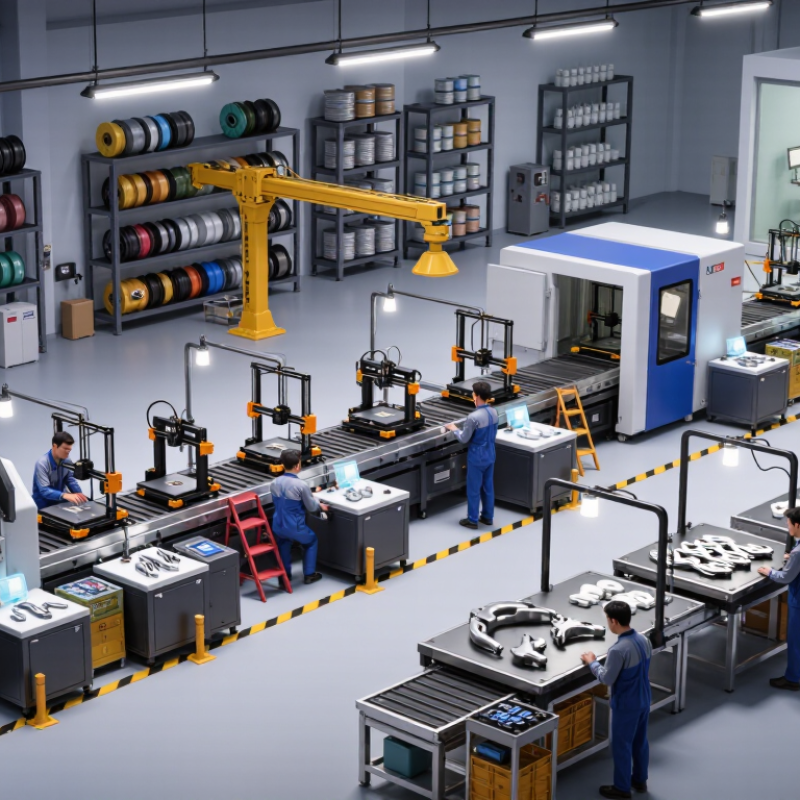
What Defines a Leading 3D Printing Manufacturer in China
A leading 3D printing manufacturer proves capability through repeatable results, not attractive showroom samples. Global buyers should request test parts with thin walls, threaded holes, and moving joints. These details expose warping, shrinkage, surface defects, and weak layer bonding. Reliable factories record machine settings, material batches, operator checks, and inspection results. Traceability matters when a production issue appears months later.
Professional teams also understand application requirements. They can explain why nylon, resin, metal powder, or engineering polymers suit a specific part. Their engineers should discuss tolerance, thermal exposure, post-processing, and expected service life in practical language.
Ask for dimensional reports and sample measurements. A qualified supplier will not promise impossible precision. That honesty builds authority.
Communication is another defining signal. Clear quotations should separate tooling, printing, finishing, packaging, and shipping costs. Production updates should include photographs, estimated completion dates, and quality findings. During factory visits, buyers may notice organized material storage, calibrated instruments, and controlled inspection areas.
Small details reveal habits. No factory is flawless. Some suppliers may still struggle with rush orders, complex geometries, or unfamiliar materials. I have found that transparent discussion of these weaknesses is more valuable than confident marketing claims. A dependable partner welcomes audits, accepts reasonable feedback, and improves its process after problems occur. Not every low price is efficient.
How the Top 10 Manufacturers Are Selected and Compared
Selecting China’s top 10 3D printing manufacturers requires more than checking production volume or website claims. Our comparison starts with verifiable factory evidence, including equipment records, material controls, inspection procedures, and export experience. We review whether a supplier can explain its process clearly, not merely display polished sample parts.
Technical capability carries significant weight. We compare dimensional accuracy, surface finish, build size, material range, and repeatability across similar orders. Test parts matter. A supplier may produce one impressive prototype but struggle with a batch of 200 units. We also examine design support, file handling, lead times, packaging, and communication during revisions. Small details often reveal operational maturity.
Cost is assessed through the full purchasing cycle. Quotation price alone can mislead buyers. We consider tooling, post-processing, shipping, failure rates, and possible redesign expenses. Quality certificates and written inspection reports improve reliability, but documents should be checked against actual practices. Customer feedback is useful when it includes dates, project scope, and measurable results.
The ranking is not perfectly objective. Public information can be incomplete, and production performance may change between orders. We therefore combine supplier interviews, sample evaluations, documented cases, and risk checks. Manufacturers with transparent limitations may score more credibly than those promising everything. Practical comparison needs evidence, patience, and a willingness to question early impressions.
Company Profiles, Technologies, and Core Industry Applications
China’s top ten 3D printing manufacturers serve different production needs. Their profiles often reveal clear strengths rather than universal excellence. Some focus on industrial metal systems, while others develop polymer printers for faster, lower-cost production. A few combine hardware, software, materials, and technical support. That combination matters when buyers need stable results across several sites.
Their technologies include selective laser melting, electron beam processing, fused filament fabrication, and vat photopolymerization. Metal platforms can produce dense parts for aerospace tooling, medical components, energy equipment, and automotive fixtures.
Polymer systems support functional prototypes, customized housings, jigs, and small-batch consumer products. Large-format machines are useful for molds and architectural models. Precision resin systems can reproduce fine channels and textured surfaces. The details matter.
Core applications vary by manufacturer. Some teams provide process parameters, powder guidance, and build simulation for demanding metal work. Others emphasize easy operation, open materials, and short training times.
Experienced buyers should inspect layer accuracy, thermal control, software compatibility, and after-sales response. A low machine price may hide expensive calibration or material limits. That is easy to miss.
Factory visits, sample testing, and production references improve purchasing confidence. Ask for dimensional reports, surface-finish data, and long-duration test records. Certifications should match the destination market and intended application. No supplier performs perfectly in every material or geometry. Even strong manufacturers may need process tuning for unusual parts, and buyers should allow time for that learning curve.
Manufacturing Capabilities, Quality Standards, and Global Reach
China Top 10 3D Printing Manufacturers for Global Buyers should be judged by more than machine count. Strong suppliers offer metal, resin, polymer, and industrial-scale production. They explain layer thickness, build volume, surface finishing, and realistic lead times. Production teams should provide material certificates and clear inspection records. ISO 9001 systems are useful, but certification alone proves little. Buyers should also examine process control, equipment maintenance, and operator training.
Quality becomes visible in small details. Ask for dimensional reports, first-article samples, and traceability from powder or resin to shipment. Reliable manufacturers may use CMM inspection, CT scanning, or calibrated gauges for critical parts. They should discuss ISO/ASTM 52900 terminology accurately. Global reach also requires export experience, secure packaging, technical English, and responsive after-sales support. Delivery promises can change. That deserves honest discussion.
Tips: Request a sample before signing a large order. Compare tolerances, warping, finish, and packaging. Confirm Incoterms, payment stages, warranty coverage, and document formats. Check whether the quoted price includes post-processing and inspection. A low quotation may hide finishing costs. Buyers should verify certificates with issuing bodies and test communication during a small pilot order. Even experienced teams can overlook regional standards or customs requirements. That is an uncomfortable gap, but reviewing it early protects quality, budget, and delivery.
China Top 10 3D Printing Manufacturers for Global Buyers
Manufacturing capabilities benchmark based on commonly published industrial machine specifications across major additive manufacturing process categories.
The chart compares typical minimum layer heights, a key indicator of achievable surface detail and production resolution. Values represent commonly reported industrial ranges and are shown as representative midpoints rather than company-specific performance data. Actual results vary by machine configuration, material, geometry, and process parameters.
Key Factors for International Buyers Choosing a Supplier
When comparing China’s top 10 3D printing manufacturers, international buyers should look beyond equipment photos and production claims. A reliable supplier explains its printing processes, material limits, surface finishes, and dimensional tolerances clearly. Ask for recent inspection records, material certificates, and sample parts made with the same process. A polished website proves little.
Communication quality matters during technical review. The supplier should understand your CAD files, functional requirements, and expected production volume. Request a written quotation with tooling, post-processing, packaging, shipping terms, and delivery dates separated. Confirm whether engineers review wall thickness, overhangs, and heat distortion before printing. Small details often expose weak process control.
Quality systems deserve careful checking. Look for traceability from powder, resin, or filament batch to the finished part. Useful evidence includes inspection reports, calibration records, and a documented procedure for handling nonconforming parts. Independent audits can add confidence, but they do not replace your own sample evaluation. Test parts under actual temperature, load, or chemical conditions when possible.
Do not choose only by unit price. A cheaper quote may exclude polishing, export packing, or replacement support. Discuss response times, spare parts, warranty limits, and technical communication after delivery. Time-zone differences can slow decisions. Set one approval contact and define change-control rules in writing. Some suppliers promise extremely short lead times; that deserves questions, not applause. A pilot order may reveal inconsistencies that a factory tour misses. Even experienced buyers can overlook packaging damage, customs paperwork, or slight color variation. Leave room for these risks.
China Top 10 3D Printing Manufacturers for Global Buyers - Key Factors for International Buyers Choosing a Supplier
| Rank | Supplier Profile | Primary Technologies | Common Materials | Typical Build Envelope | Typical Prototype Lead Time | Quality & Compliance Indicators | Best-Fit Applications | International Buyer Checkpoints |
|---|---|---|---|---|---|---|---|---|
| 01 | Industrial Polymer Specialist | SLS, MJF, FDM/FFF | PA12, PA11, glass-filled nylon, ABS, PC | Up to approximately 380 × 380 × 380 mm | 3–7 working days | ISO 9001 quality system; dimensional inspection; material batch records | Functional prototypes, housings, ducting, low-volume polymer parts | Request powder refresh policy, inspection report, surface-finish standards, and export packaging details. |
| 02 | Metal Powder-Bed Production Partner | SLM, DMLS, metal laser powder-bed fusion | Aluminum alloys, stainless steel, titanium alloys, tool steel | Up to approximately 250 × 250 × 300 mm | 10–20 working days | Powder traceability; density testing; heat-treatment records; CMM or scanner inspection | Aerospace fixtures, medical components, tooling, lightweight metal structures | Confirm material certificates, porosity limits, stress-relief process, and non-destructive testing options. |
| 03 | Large-Format FDM Manufacturer | Large-format FDM/FFF, pellet extrusion | PLA, ABS, ASA, PETG, nylon, carbon-fiber-filled polymers | Up to approximately 1,000 × 1,000 × 1,000 mm | 5–12 working days | Process parameter records; nozzle calibration; dimensional checks; documented post-processing | Automotive patterns, molds, architectural models, large industrial prototypes | Check layer-bonding expectations, anisotropic strength data, machining allowance, and assembly tolerances. |
| 04 | SLA and Optical-Resin Studio | SLA, DLP, LCD resin printing | Standard resin, tough resin, high-temperature resin, castable resin | Up to approximately 450 × 450 × 450 mm | 2–5 working days | Layer-resolution records; post-curing controls; visual inspection; color and finish samples | Consumer-product models, visual prototypes, dental and jewelry patterns, casting masters | Validate resin technical data, UV-aging behavior, curing schedule, and expected dimensional shrinkage. |
| 05 | Industrial SLS Batch-Service Provider | SLS, selective laser sintering | PA12, PA11, TPU, glass-filled polyamide | Up to approximately 700 × 380 × 580 mm | 5–10 working days | Powder-management records; dimensional inspection; batch identification; repeatability checks | End-use plastic parts, clips, brackets, ergonomic products, short production runs | Ask for tensile-property orientation data, surface roughness values, dyeing capability, and batch consistency evidence. |
| 06 | Metal Investment-Casting Pattern Supplier | Wax/resin printing, investment casting pattern production | Castable resin, wax-like resin, ceramic shell systems | Up to approximately 300 × 300 × 200 mm | 4–10 working days | Pattern inspection; casting-process records; alloy certificates; visual and dimensional reports | Jewelry, precision mechanical parts, impellers, customized metal components | Confirm burnout behavior, casting tolerances, alloy availability, and responsibility for casting defects. |
| 07 | Medical and Dental Prototype Specialist | SLA, DLP, SLS, metal powder-bed fusion | Biocompatible resin, dental resin, titanium alloys, surgical-grade polymers | Up to approximately 200 × 200 × 300 mm | 5–15 working days | Material biocompatibility documentation; controlled production records; traceability procedures | Anatomical models, surgical planning aids, dental models, non-implantable prototypes | Verify intended use, regulatory documentation, sterilization compatibility, and whether the part is for planning or clinical use. |
| 08 | Rapid Tooling and Mold Insert Supplier | Metal printing, polymer printing, CNC finishing, hybrid tooling | Tool steel, aluminum alloys, stainless steel, high-temperature polymers | Up to approximately 400 × 400 × 400 mm | 10–25 working days | Hardness testing; machining inspection; mold-trial records; dimensional inspection reports | Injection-mold inserts, thermoforming tools, casting patterns, production jigs | Review tool-life assumptions, cooling-channel design, surface treatment, repair policy, and mold-trial responsibility. |
| 09 | Architectural and Construction Printing Provider | Concrete extrusion, robotic extrusion, large-format polymer deposition | Cementitious mixes, mortar, geopolymer materials, recycled aggregates | Project-dependent; commonly above 1,000 mm in one axis | 2–8 weeks for pilot projects | Mix-design records; compressive-strength testing; construction safety procedures; project documentation | Building components, landscape elements, structural prototypes, custom architectural forms | Confirm local building-code compliance, material testing standards, site requirements, and installation responsibilities. |
| 10 | Multi-Technology Contract Manufacturer | SLA, SLS, FDM/FFF, metal printing, CNC finishing | Engineering polymers, elastomers, aluminum, stainless steel, titanium | Technology-dependent; approximately 200–1,000 mm | 5–20 working days | ISO 9001 quality system; supplier traceability; first-article inspection; documented outsourcing controls | Mixed-material projects, product development, replacement parts, pilot production | Assess process ownership, subcontracting transparency, unified quality control, logistics capability, and after-sales support. |
Note: The figures shown are industry-standard indicative ranges for supplier screening rather than guaranteed specifications. International buyers should verify machine capacity, material certificates, quality records, lead times, export documentation, intellectual-property protection, and applicable regulatory requirements before placing an order.