
How to Choose a Pallet Banding Kit in 2026?
Choosing a Pallet Banding Kit in 2026 requires more than comparing strap prices. A warehouse manager must examine load weight, pallet dimensions, product edges, storage conditions, and shipping distance. A kit that works for boxed appliances may fail around sharp metal parts. That difference matters.
Smithers’ The Future of Packaging to 2028 values the global packaging market at more than one trillion U.S. dollars. Its analysis also highlights sustainability, material efficiency, and recyclable designs as growing priorities. The 2024 MHI Annual Industry Report identifies labor availability, automation, and supply chain resilience as major operational concerns. These findings support a practical question: can one Pallet Banding Kit reduce handling time without weakening load security?
Dr. Jay Singh, a packaging professor at California Polytechnic State University, has emphasized, “Packaging is a system, not merely a material.” His point is useful here. The strap, buckle, tensioner, corner protection, and operator technique must work together. A cheaper kit may create hidden costs through damaged cartons, loose loads, or repeated rework. Small details matter.
Look closely at tensile strength, strap width, buckle compatibility, tool ergonomics, and replacement availability. Test the kit on real pallets. Do not rely only on laboratory claims. In my view, many buying guides still overlook awkward warehouse conditions, including cold floors, dust, and rushed loading shifts. That gap deserves honest review. The right choice should protect products, support workers, and fit the company’s measurable shipping requirements.
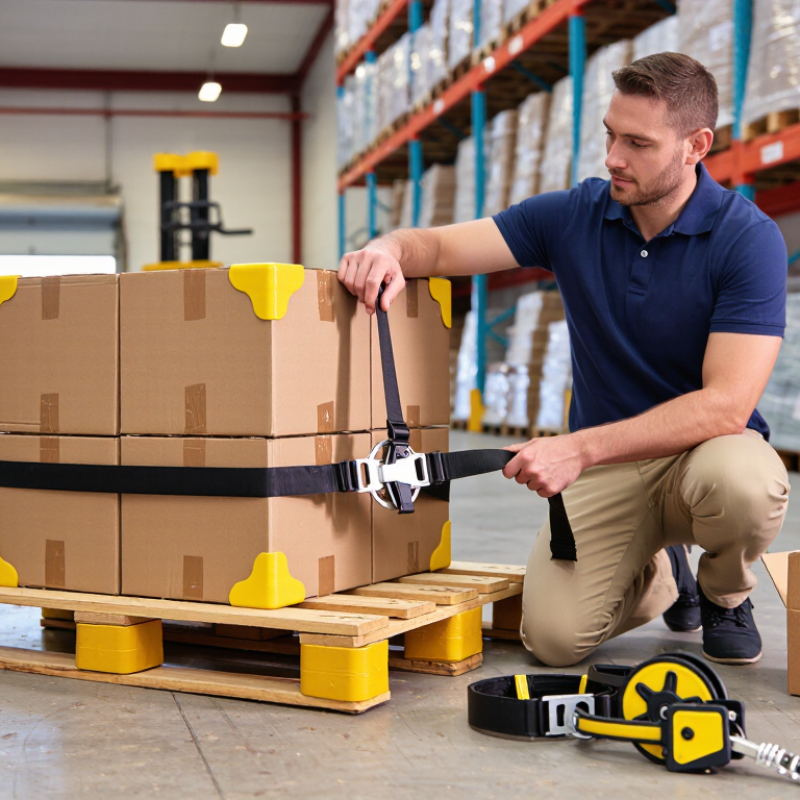
Understanding Pallet Banding Kits and Their Main Components
How to Choose a Pallet Banding Kit in 2026?
A pallet banding kit combines several tools for securing stacked goods during handling and transport. The main components usually include plastic or steel banding, a dispenser, a tensioner, and a sealing tool. Some kits use buckles or seals, while others rely on friction welding. Details matter here. The band should match the load’s weight, surface, and sharp edges. Plastic banding suits many general shipments, while steel banding may support heavier industrial loads.
Corner protectors are easy to overlook, but they spread pressure across cartons and reduce crushing. A stable dispenser keeps the strap clean and prevents tangles near the pallet. The tensioner should offer controlled force, not simply maximum force. Excessive tension can damage boxes or deform fragile products. Workers also need gloves and clear operating instructions. A kit is only reliable when users can handle it consistently.
In practical warehouse checks, I would inspect the strap path before tightening. Loose wrapping, uneven stacking, or wet cartons can weaken the result. I once focused too much on tool strength and ignored pallet condition. That was a poor judgment. The better choice considers the complete system: load shape, band width, sealing method, storage conditions, and operator skill. Testing one prepared pallet can reveal slipping, crushed corners, or difficult seals before wider use.
Assessing Load Size, Weight, and Packaging Requirements
Choosing a pallet banding kit in 2026 starts with the load, not the tool. Measure pallet length, width, height, and total weight before comparing equipment. A compact carton stack may need light-duty plastic strapping and a manual tensioner. Dense bags, timber, or machinery require stronger strap strength and more controlled tension.
Load shape matters as much as weight. Uneven layers can shift when straps compress soft packaging. Use corner protectors to prevent strap damage and crushed boxes. Check whether the shipment faces rain, cold storage, dust, or repeated handling. Moisture can weaken some packaging materials, while excessive tension may damage fragile cartons. In practical warehouse trials, the safest setting is rarely the tightest one. I have sometimes selected extra strength too early. That added cost without improving stability.
Tips: Match strap width to load resistance and pallet edges. Test one secured pallet before full production. Watch for leaning, strap cuts, and crushed corners after movement. Keep spare seals or buckles nearby. Train operators to inspect tension, not just appearance. Record failures honestly. Small details matter. A simple drop, tilt, or forklift-handling check can reveal weaknesses that look invisible during packing.
How to Choose a Pallet Banding Kit in 2026? — Assessing Load Size, Weight, and Packaging Requirements
| Load profile | Example pallet footprint and load height | Example gross load weight | Packaging and handling needs | Banding material to consider | Useful kit features |
|---|---|---|---|---|---|
| Light, uniform cartons | 48 × 40 in (about 1,220 × 1,020 mm); up to 48 in (1,220 mm) high | Up to 500 lb (about 225 kg) | Stable, consistently stacked cartons; low risk of sharp edges | Polypropylene (PP) strap for light-duty unitizing | Manual tensioner and sealless joint or compatible seals; confirm the tool accepts the selected strap width and thickness |
| Moderate-weight cartons or bagged goods | 48 × 40 in (about 1,220 × 1,020 mm); 36–60 in (915–1,525 mm) high | 500–1,500 lb (about 225–680 kg) | May need corner protection to prevent strap damage or crushing; stretch wrap can help control shifting | PP for less demanding loads; polyester (PET) for greater tension retention and tougher transport conditions | Adjustable manual tensioner with a compatible sealer or combination tool; include edge protectors where cartons are vulnerable |
| Dense, heavy, or export-bound unit loads | 48 × 40 in or 47.2 × 39.4 in (1,200 × 1,000 mm); height depends on product stability | 1,500–3,000 lb (about 680–1,360 kg) | Higher restraint demands; assess load stability, vibration, transport distance, and whether the pallet can support the load | PET is commonly considered as an alternative to steel for many heavy-duty applications; steel may suit rigid loads or high-temperature conditions | Heavy-duty tensioning and jointing equipment matched to strap material and dimensions; verify joint strength and operator safety requirements |
| Rigid products with sharp edges | Footprint and height vary; measure the load at its widest points and check for overhang | Weight alone does not determine the suitable strap | Sharp corners can cut or abrade plastic strap; protect contact points and avoid excessive tension on fragile edges | PET or steel, selected according to product rigidity, edge protection, and transport conditions | Compatible heavy-duty tool and seals or joints; add corner protectors and confirm strap-path clearance |
| Irregular, unstable, or mixed-size loads | Measure actual load dimensions; note uneven layers, voids, and any overhang | Record the fully loaded pallet weight, not just the product weight | May require stretch wrap, slip sheets, corner boards, or rearranging the load before banding | Choose PP or PET only after assessing load stability and required restraint; banding alone may not control shifting | Kit should provide suitable strap length and tool access for the planned strap pattern; trial the load configuration before routine use |
Selection note: These weight ranges are planning examples, not universal engineering limits. Actual strap requirements depend on load geometry, pallet condition, stacking, transport forces, strap specifications, and joint strength. Check the tool’s compatibility with strap material, width, and thickness, and follow applicable workplace safety procedures.
Comparing Band Materials, Tools, and Tensioning Methods
Choosing a pallet banding kit in 2026 starts with load behavior, not the tool’s appearance. Polyester strap suits heavy, rigid loads and retains tension during temperature changes. Polypropylene costs less and works for light cartons, but it may stretch around sharp corners. Steel banding handles severe compression, yet it requires edge protection and careful handling. A damaged strap is not a minor defect.
Manual tensioners remain practical for occasional pallets. They require consistent hand force, so results can vary between operators. Battery tensioners improve speed and repeatability on busy packing lines. Pneumatic tools suit fixed stations, though air maintenance adds work.
Friction-weld sealing is fast for plastic strap, while metal seals remain useful with steel. A windlass-style method can control uneven loads, but loose sections may appear if the operator stops early. Not strength alone.
Check strap width, core size, tool compatibility, and replacement parts before purchasing. Test the kit on a loaded pallet, then measure strap movement after twenty-four hours. Keep corners protected because pressure concentrates there. I once underestimated a rounded carton edge, and the strap slowly cut into the packaging. That mistake changed my inspection routine. Now I check tension at the top, middle, and base. Small errors matter. No kit corrects poor pallet stacking. Operators need brief training, clear limits, and repeatable inspection records.
Selecting the Right Kit for Storage, Transport, and Handling Conditions
How to Choose a Pallet Banding Kit in 2026?
Choosing a pallet banding kit starts with the load’s real working conditions. A kit for dry warehouse storage may not suit outdoor transport. Check the pallet’s weight, height, shape, and surface stability. Heavy cartons often need stronger banding and wider edge protection. Fragile boxes need controlled tension. Too much pressure can crush corners or deform packaging.
During transport, vibration and sudden braking can loosen poorly applied bands. Select a kit with a reliable tensioning tool, secure seals, and bands suited to the load. For humid or changing environments, inspect resistance to moisture and temperature shifts. Measure a packed pallet, not an empty sample. Small differences matter. I have found that awkward corners are often missed during rushed packing.
Tips: Match band strength to the heaviest realistic load. Use corner protectors on soft cartons. Test one secured pallet before preparing a full shipment. Check the bands after handling, especially when pallets move between forklifts, trucks, and storage racks. Keep tools clean and replace worn parts. Record what worked, but question old habits when the load changes.
Checking Safety Features, Compatibility, Cost, and Long-Term Value
Choosing a pallet banding kit starts with the load, not the price tag. In warehouse trials, I inspect package weight, edge shape, surface, and stacking height. A kit should offer controlled tension, a reliable cutter, and guarded moving parts. These details reduce hand injuries and crushed cartons. Check the strap path before purchase. It should remain stable around corners and during repeated tightening. A loose tension handle feels minor, but it can cause uneven restraint during transport. Ask for operating instructions and documented test results. Supplier support matters when workers need training or replacement parts.
Compatibility affects every shift. Match the tool with the strap width, thickness, material, and seal or buckle type. Test it on a real pallet, including awkward loads and rough edges. Some kits perform well on light boxes but struggle with dense machinery. That difference is easy to miss in a showroom. Confirm battery runtime, charging requirements, and spare-part availability for electric models. Manual tools need less infrastructure, yet they may increase fatigue during high-volume work. A short trial reveals more than a polished specification sheet.
Tips: Calculate total cost over three years. Include straps, seals, batteries, repairs, training, and downtime. The cheapest kit can become expensive after repeated jams. I also record tension consistency across several operators. Results often vary more than expected. Review maintenance instructions with the actual users, not only supervisors. Leave room for improvement. A kit that feels perfect today may not suit a heavier product line next year. Choose adjustable equipment when future loads remain uncertain. Keep inspection records and replace worn components before performance becomes unpredictable.
How to Choose a Pallet Banding Kit in 2026?
Comparison of common pallet banding kit categories using a 1–5 selection scale across safety, compatibility, cost, durability, and productivity.
Manual steel strapping kits offer strong load security and low purchase cost, while battery-powered plastic strapping kits provide a balanced combination of safety, compatibility, and productivity. Pneumatic steel strapping kits are better suited to high-volume operations but usually require higher investment and supporting equipment.