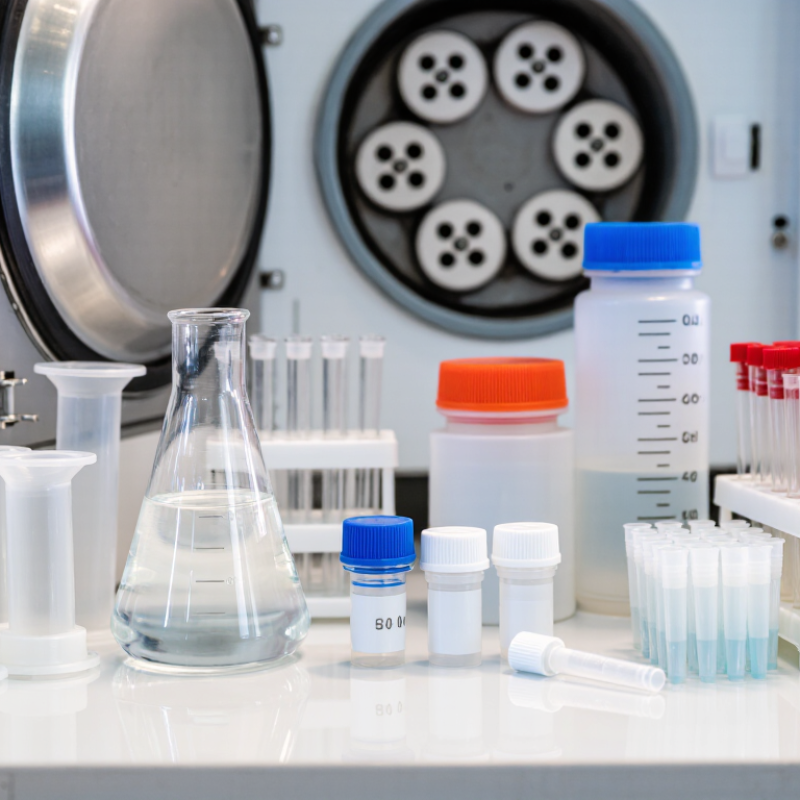
2026 Top Centrifuge Tube Types Which One Is Best?
Choosing the right Centrifuge Tube is not a minor laboratory decision. It can affect sample recovery, balance, contamination control, and result consistency. In 2026, laboratories can select from conical, round-bottom, PCR, microcentrifuge, ultracentrifuge, and specialty tubes. Each design serves a different purpose.
The “best” tube depends on the experiment. A 1.5 mL polypropylene tube may suit routine molecular work, while a 50 mL conical tube offers better handling for larger biological samples. Some applications require low-binding surfaces, sterile packaging, temperature resistance, or compatibility with high centrifugal force. Tube volume alone is not enough. Rotor design matters too. Always check the manufacturer’s rated RCF, material limits, closure type, and chemical compatibility before use.
Small details often decide whether a run succeeds. A loose cap can cause leakage. An overloaded tube may deform. An unmatched tube can fail inside the rotor. Experienced technicians also inspect tubes for cracks, cloudy walls, and damaged threads before loading them. Still, no guide can predict every laboratory condition. Published specifications may not reflect aging equipment, repeated freezing, or unusual solvents. That limitation deserves attention. This article compares major Centrifuge Tube types through practical use, technical specifications, and safety considerations. It aims to support informed selection, not promote one universal product. Reliable results begin with the tube, but they also depend on correct balancing, validated procedures, and careful handling.
What Are Centrifuge Tubes and Why Do Their Types Matter?
2026 Top Centrifuge Tube Types: Which One Is Best?
Centrifuge tubes are laboratory containers designed to hold samples during spinning. A rotor applies strong centrifugal force, separating materials by density. The tube must withstand that force without cracking, leaking, or deforming. Its type matters because sample volume, speed, temperature, and chemical exposure vary between procedures.
Conical tubes suit routine sample processing and make pellets easier to collect. Microcentrifuge tubes handle small volumes and often support rapid molecular workflows. Larger tubes are useful when more liquid must be processed, but they require a compatible rotor. Material also matters. Polypropylene usually offers good chemical resistance and temperature tolerance. Polystyrene is clearer, but it may be less suitable for harsh conditions. Glass can support particular chemical needs, although breakage requires careful risk assessment.
Do not choose by size alone. Check the tube’s maximum relative centrifugal force, not only its revolutions per minute. Confirm temperature limits, closure security, sterility, and chemical compatibility. In practical work, I have learned that a tube can look perfectly suitable and still fail under an unsuitable rotor setting. That mistake is easy to make. A slightly wet cap or an uneven load can also affect safety and results. Matching the tube to the centrifuge, sample, and protocol remains more important than selecting the most expensive option. Sometimes, the “best” tube is simply the one with verified specifications and a reliable fit.
How Centrifuge Tube Types Differ by Material, Design, and Capacity
2026 Top Centrifuge Tube Types: Which One Is Best?
Centrifuge tubes differ most in material, design, and capacity. Polypropylene tubes tolerate many chemicals, repeated temperature changes, and high-speed spinning. They are the practical choice for routine molecular and cell work. Polystyrene tubes are clearer and more rigid, but they are less suitable for harsh solvents or freezing. Glass offers excellent chemical resistance, yet it adds breakage risk and requires careful balancing. A 2024 Grand View Research report valued the global centrifuge market at about USD 1.9 billion in 2023, showing strong demand for reliable sample-processing equipment.
Design affects handling as much as material. Conical bottoms improve pellet recovery, while self-standing bottoms support easier pipetting. Screw caps reduce leakage during mixing and transport. Snap caps save time, but their seals may need closer inspection after repeated use. The U.S. CDC recommends matching containers with the procedure, temperature, and potential exposure risk. That advice sounds basic. It is often ignored.
Capacity changes workflow. Microtubes commonly hold 0.5 to 2 milliliters, while larger tubes often carry 15 or 50 milliliters. Bigger tubes process more sample, but they need stronger rotors and more bench space. Check the tube’s rated relative centrifugal force, not only its volume. A 50-milliliter tube is not automatically safer at high speed. In practice, the best type depends on solvent compatibility, temperature, rotor fit, and whether the pellet must be recovered cleanly. Sometimes, the “best” tube is simply the one your team has tested properly.
| Tube Type | Typical Material | Common Nominal Capacity | Design and Closure | Typical Applications | Main Advantages | Key Limitations | Best Choice When... |
|---|---|---|---|---|---|---|---|
| Microcentrifuge Tube | Polypropylene (PP) | 0.5 mL, 1.5 mL, and 2.0 mL | Conical or tapered bottom; hinged snap cap or screw cap; often designed for fixed-angle microcentrifuge rotors | DNA and RNA purification, PCR preparation, protein precipitation, cell lysate processing | Low sample loss, small working volume, good chemical resistance, and broad compatibility with laboratory microcentrifuges | Limited sample volume; snap caps may be unsuitable for some high-speed, heated, or long-duration runs unless specifically rated | You need to process small samples quickly with minimal reagent consumption |
| 15 mL Conical Tube | Polypropylene (PP); some versions use polystyrene for lower-stress applications | 15 mL nominal capacity; practical working volume is commonly below the nominal fill level | Conical bottom for pellet collection; threaded screw cap; may be supplied sterile, graduated, or rack-compatible | Routine cell culture, bacterial harvesting, sample clarification, and general laboratory separation | Easy pellet recovery, clear graduations, convenient handling, and good compatibility with common swing-bucket rotors | The actual allowable RCF depends on tube construction, rotor, adapters, temperature, and run duration | You need a versatile medium-volume tube for routine biological samples |
| 50 mL Conical Tube | Polypropylene (PP); polystyrene is available for selected low-speed uses | 50 mL nominal capacity; commonly used with a reduced working volume to prevent leakage or splashing | Conical bottom, screw cap, molded graduations, and a wide upper body for manual handling and sample mixing | Mammalian cell culture, microbial pellets, precipitation, washing steps, and larger-volume sample preparation | High sample capacity, convenient pellet visibility, and broad availability in sterile and non-sterile formats | Requires a rotor or adapter designed for 50 mL tubes; large pellets may be harder to resuspend than in round-bottom vessels | You need to process larger biological samples using standard benchtop centrifuges |
| Round-Bottom Cell Culture Tube | Polypropylene (PP) or polystyrene (PS) | Typically 5 mL, 12 mL, or 14 mL, depending on the tube format | Rounded bottom; screw cap or plug-style closure; commonly used in swing-bucket racks | Cell culture handling, density-gradient work, washing cells, and samples where gentle resuspension is important | Promotes smooth liquid flow, reduces sharp pellet compaction, and is convenient for repeated washing and resuspension | Less effective than a conical tube for collecting a highly concentrated pellet; PS generally has lower chemical and impact resistance than PP | You prioritize gentle sample handling and easy resuspension over maximum pellet concentration |
| Thick-Wall High-Speed Tube | High-strength polypropylene or polycarbonate | Common formats include approximately 5 mL, 10 mL, 15 mL, and 50 mL, depending on the rotor system | Reinforced wall; screw cap or sealed cap; geometrically matched to a high-speed fixed-angle rotor | High-RCF clarification, nucleic-acid precipitation, membrane collection, and dense-particle separation | Designed for higher centrifugal stress than ordinary conical tubes; improved dimensional stability during demanding runs | Must be matched precisely to the specified rotor, adapter, fill volume, and maximum RCF; not interchangeable with standard tubes | You require high-speed centrifugation and have the exact rotor-tube specifications available |
| Ultracentrifuge Tube | Polypropylene, polyallomer, or polycarbonate, depending on the application | Often approximately 0.5 mL to 100 mL; exact sizes are rotor-specific | Thin-wall or thick-wall construction; open-top, screw-cap, or heat-sealable formats; designed for specialized ultracentrifuge rotors | Virus and vesicle purification, ribosome separation, membrane fractionation, and macromolecular studies | Supports very high centrifugal forces and density-gradient separations when used with the correct rotor system | Higher cost, specialized balancing and filling requirements, and strict compatibility rules for rotor, tube material, and sealing method | You need ultrahigh RCF or density-gradient separation that standard laboratory tubes cannot support |
| PCR and Strip Tube | Polypropylene (PP) | Approximately 0.2 mL per well; 8-well and 12-well strips are common | Thin-wall wells; individual or strip format; flat, domed, or optical caps; designed for thermal cycling and small-volume centrifugation | PCR, qPCR, genotyping, and short spin-downs before or after thermal cycling | Very low sample volume, efficient heat transfer, and compatibility with multiwell workflows | Not suitable for large-volume separation or prolonged high-speed centrifugation unless specifically rated for that purpose | You are working with amplification reactions or other sub-milliliter samples |
| Cryogenic Centrifuge Tube | Specialized polypropylene or other low-temperature-rated polymer | Commonly 1.0 mL, 1.5 mL, 2.0 mL, 4.5 mL, and 5.0 mL | Screw cap with sealing gasket or O-ring; external or internal thread; may include a self-standing base | Frozen cell pellets, biobanking samples, long-term storage, and centrifugation of cold specimens | Suitable for low-temperature storage when properly rated; secure closure and good resistance to repeated handling | Storage-temperature limits and centrifugation ratings are separate specifications; not every cryogenic tube is suitable for high RCF | You need one tube format for cold processing followed by controlled sample storage |
| Glass Centrifuge Tube | Borosilicate glass or other laboratory-grade glass | Commonly 5 mL to 100 mL, with capacity determined by the tube and rotor design | Rigid cylindrical or conical body; may use a stopper, screw cap, or open top; requires compatible holders or adapters | Organic-solvent work, selected analytical procedures, and applications requiring a rigid, reusable vessel | Good transparency, dimensional stability, and resistance to many organic solvents and gases | Breakage risk, higher mass, limited resistance to impact and thermal shock, and possible incompatibility with high-speed rotors | You need solvent compatibility or rigidity and the centrifuge is specifically approved for glass tubes |
| Specialized Sealed Tube | Polypropylene, polyallomer, polycarbonate, or glass, depending on the process | Usually 2 mL to 50 mL; formats are application- and rotor-specific | Sealed cap, gasket, heat seal, or pressure-rated closure; intended to reduce leakage, evaporation, or aerosol release | Potentially hazardous samples, volatile liquids, infectious materials, and procedures requiring containment | Improved containment and reduced risk of leakage or aerosol generation when used with an approved sealed rotor or safety cup | Sealing components may reduce usable volume; the tube, cap, rotor, and containment system must be validated as one assembly | Containment and operator safety are more important than convenience or lowest consumable cost |

Note: Capacity, maximum RCF, temperature range, chemical compatibility, sealing method, and reusability vary by tube design and centrifuge system. Always follow the tube and rotor manufacturer’s specifications, use the stated adapters, balance tubes accurately, and do not exceed the lowest rated limit of the complete setup.
Which Centrifuge Tube Fits Each Laboratory Application?
2026 Top Centrifuge Tube Types: Which One Is Best?
The best centrifuge tube depends on the sample, rotor, speed, and workflow. In routine bench work, 15 mL and 50 mL conical polypropylene tubes suit cell suspensions, culture harvests, and washing steps. Their tapered bottoms help collect pellets, while clear walls make layering and volume checks easier.
For DNA, RNA, and protein samples, small microcentrifuge tubes usually provide better control. They need less sample volume and fit high-speed laboratory centrifuges. Low-binding surfaces can reduce sample loss, especially with dilute proteins.
PCR tubes fit thermal cycling workflows, but they are not automatically suitable for every centrifuge. Rotor compatibility matters.
For high-speed or ultracentrifugation, use tubes specifically rated for the required force and liquid density. Thin-wall tubes may improve performance, yet they can be less forgiving during handling. Glass tubes may resist certain solvents, although breakage and chemical compatibility require careful review. Check the tube material, maximum RCF, fill range, cap security, and temperature rating before use.
I have seen good tubes fail when the rotor was overlooked. That mistake is easy to repeat. A tube that fits physically may still be unsafe at high speed. Application guides help, but local validation remains important. Sample viscosity, balancing accuracy, and repeated freezing can change the result. There is no universal best tube. There is only the better match for a defined laboratory task.
How to Compare Tube Strength, Chemical Resistance, and Sterility
Choosing a centrifuge tube starts with the test, not the label. Polypropylene tubes usually tolerate repeated spinning, moderate heat, and many aqueous buffers. Polystyrene tubes are often clearer, but they can become brittle under stress. A tube may look sturdy and still fail at high relative centrifugal force (RCF).
Check the rated RCF, not only the revolutions per minute. Rotor radius changes the actual force. Inspect the wall, cap thread, and bottom shape for weak points. Keep the load balanced, and avoid filling tubes to the rim. Cold temperatures can reduce flexibility, while warm samples may soften some plastics. In routine work, small scratches matter more than expected.
Chemical resistance needs a separate check. Acids, alcohols, detergents, and organic solvents can affect plastics differently. Compatibility charts help, but they are not perfect for mixed solutions or long exposure. Test a spare tube with the real solution when the result is valuable. Watch for clouding, swelling, cracks, or a loose cap.
Sterility involves more than a sealed package. Confirm the sterilization method, lot information, expiry date, and packaging integrity. Sterile tubes suit contamination-sensitive cultures and molecular workflows, while nonsterile tubes may fit general preparation. Do not confuse sterile with certified low endotoxin or nuclease-free. That assumption can compromise sensitive assays. A practical comparison records tube material, RCF rating, chemical exposure, temperature, and sterility requirement side by side.
How to Choose the Best Centrifuge Tube for Your Workflow
Choosing the best centrifuge tube starts with your workflow, not the centrifuge name. Define sample volume, target RCF, temperature, solvent exposure, and recovery needs. Polypropylene suits many aqueous samples and tolerates repeated centrifugation. Polystyrene offers good clarity but handles aggressive solvents poorly. For density-gradient or high-speed work, select tubes rated for that rotor and RCF. RPM is not enough. Calculate RCF from rotor radius.
A 2024 market analysis by Grand View Research estimated the global centrifuge tube market at over USD 1 billion, with continued growth through 2030. That expansion reflects broader laboratory demand, but market size cannot prove tube quality. In practice, verify material compatibility, wall strength, maximum fill volume, and sealing performance. Inspect tubes for scratches before loading. Small defects can become failures under high force.
For molecular workflows, low-binding, sterile, DNase-free, and RNase-free specifications may protect sample integrity. For clinical work, follow validated procedures and applicable quality standards, including ISO 15189 requirements where relevant. Sealed rotors or safety cups are appropriate when aerosols may be generated, consistent with CDC and NIH biosafety guidance. I would also test a new tube with a small batch first. Manufacturer data can be incomplete, and real samples sometimes behave differently. A cheaper tube may waste an expensive specimen. A larger tube may also increase dead volume and reduce recovery.
2026 Top Centrifuge Tube Types: Which One Is Best?
How to choose the best centrifuge tube for your workflow based on sample volume and common laboratory applications.
Best for PCR, qPCR, and other small-volume molecular workflows.
Suitable for nucleic acid preparation, protein work, and routine bench-scale processing.
A practical choice for cell culture, sample washing, and medium-volume separations.
Best for larger sample volumes, buffer preparation, and cell or particulate collection.
The chart uses common nominal tube capacities in milliliters. Actual usable volume, maximum RCF, temperature range, material compatibility, and rotor fit vary by tube design and centrifuge, so always verify the specifications before use.